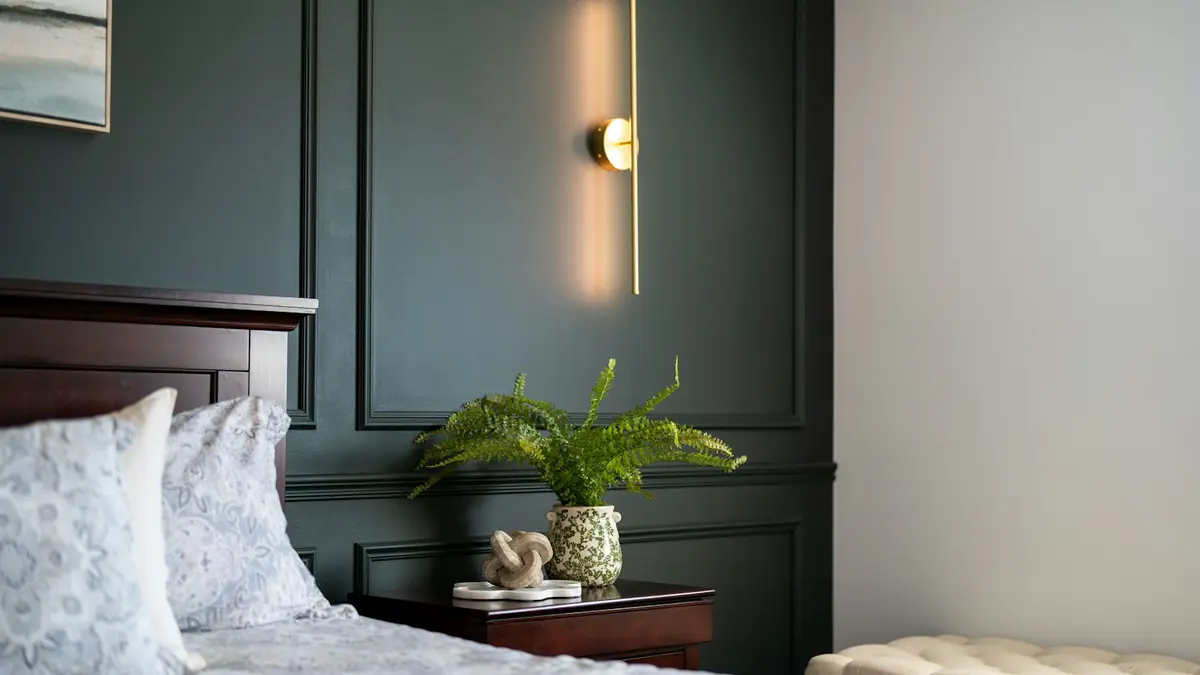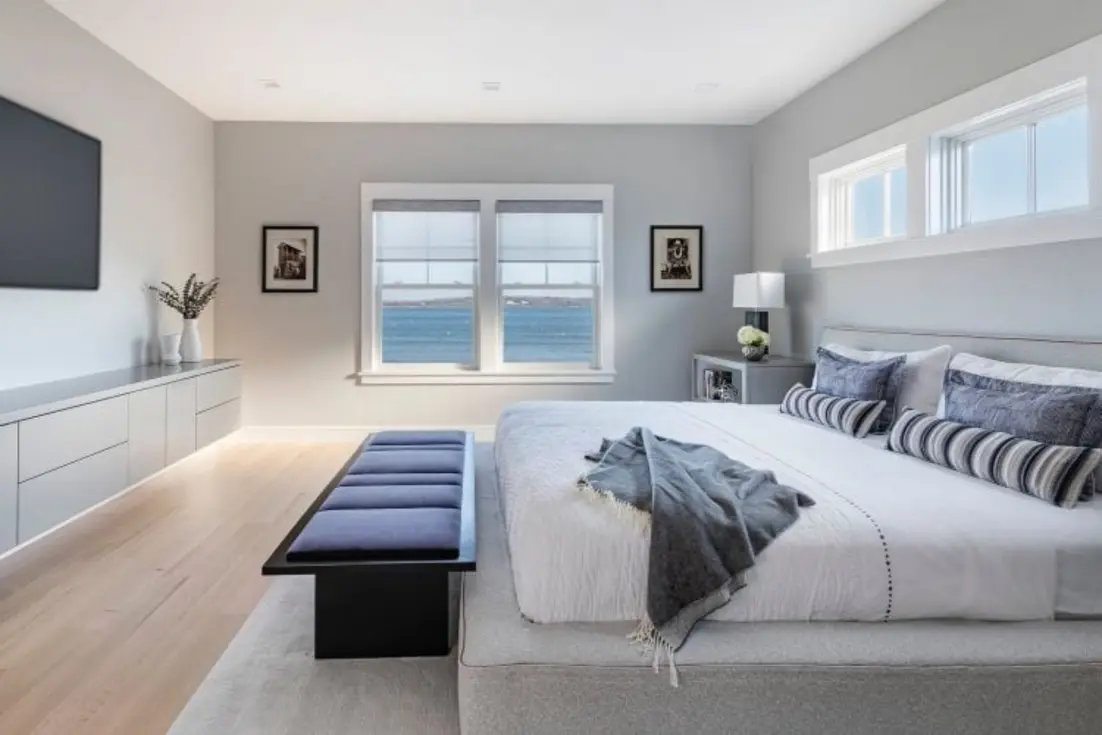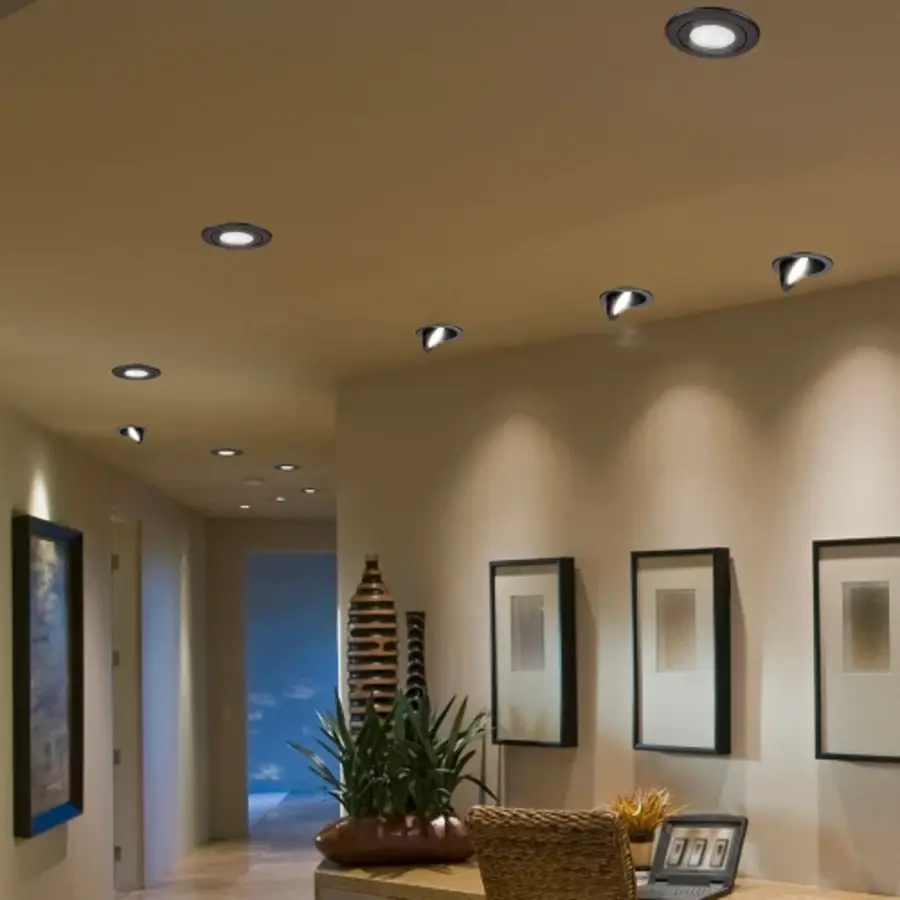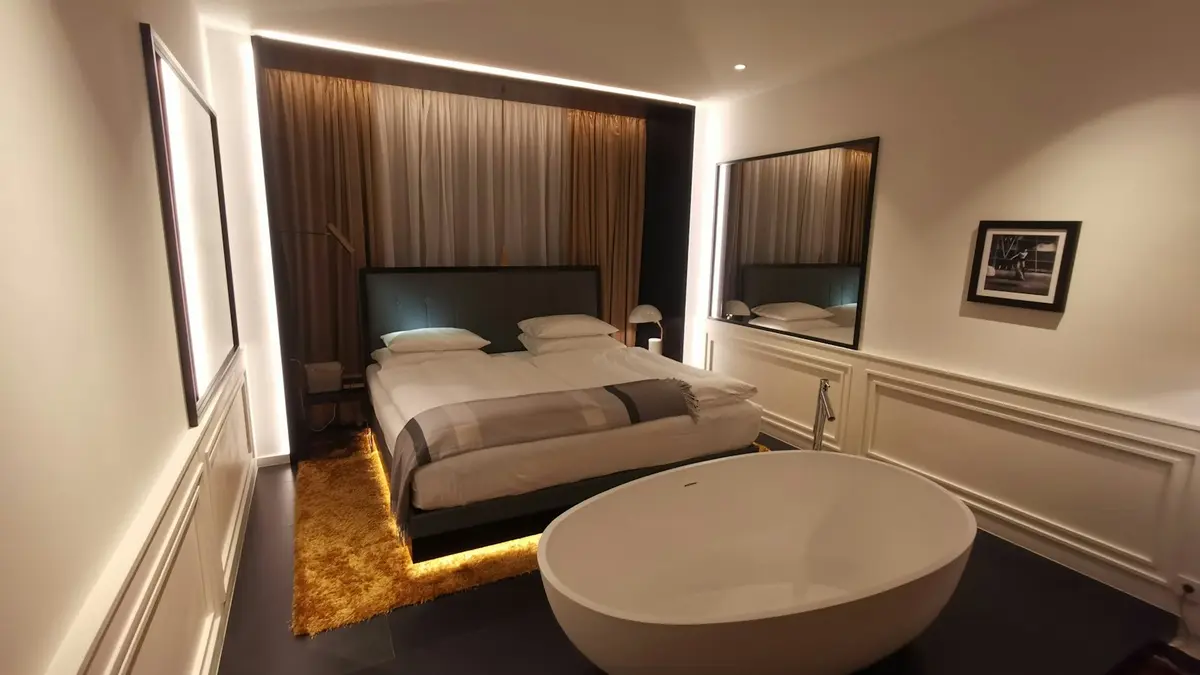
Bedroom indirect LED uplighting works by aiming concealed LEDs at the ceiling or upper wall, then using that surface to spread light back into the room. Because you see the illuminated ceiling instead of the individual LEDs, the result can feel even and comfortable, with far less direct glare than an exposed strip or a bare ceiling fixture.
The apparent difference between daytime and nighttime is mostly about perception, not the LEDs changing their output. During the day, daylight adds broad illumination and makes the room, ceiling, and furnishings easier to see. At night, the same uplighting may become the room’s main light source, but your eyes adapt to the darker surroundings and a dimmed setting can feel deliberately soft. A well-planned system should be able to provide useful general light when needed and reduce to a low, restful level before bed.
How bedroom indirect LED uplighting creates soft light
In an indirect cove lighting bedroom installation, the strip is hidden in a recess, behind a valance, on top of a wardrobe, or within a perimeter detail near the ceiling. It points upward or inward toward a wall and ceiling rather than down into the room.
That changes the path of the light:
- The LEDs emit light toward a reflecting surface.
- The ceiling and upper walls absorb some of that light.
- The remaining light is reflected into the room from a much larger area.
- Your eye reads the illuminated ceiling plane as a broad, low-glare source.
A large luminous surface produces gentler shadows than a small, exposed source. This is why indirect lighting can make bedding, wardrobes, and room corners easier to see without creating the hard-edged shadows often associated with a central downlight.
The light is not literally shadow-free. Objects close to a wall, a tall headboard, deep shelving, and dark furniture can still create darker areas. But indirect lighting usually makes shadows softer and distributes brightness more widely across the room.
Why it can seem brighter during the day
If the LED setting is unchanged, its delivered light is broadly unchanged. What changes is the total light in the room and the way your vision interprets it.
Daylight adds to the room’s overall illumination
Window light can brighten the ceiling, walls, floor, and furnishings at the same time as the cove LEDs. The bedroom may therefore look open, evenly illuminated, and visually active. In this condition, the uplighting is often supporting the daylight rather than doing most of the work.
A room can look bright in daytime even when the LED strip itself is not especially noticeable. The ceiling may simply appear naturally light because it is receiving daylight as well as reflected LED light.
Daylight reduces contrast around the cove
At night, a glowing ceiling edge may stand out strongly against dark windows, dark corners, and unlit surfaces. During the day, daylight fills many of those darker areas. This reduces contrast and can make the lighting appear smoother and more integrated with the room.
That is one reason indirect lighting even illumination can look especially convincing in a bedroom with pale walls and good daylight: the room already has broad, diffuse light coming from more than one direction.
Automatic controls may be changing the output
If the lighting is connected to a smart system, daylight sensor, scene controller, or dimmer with saved settings, the strip may genuinely be operating at a different level at different times. Check the app, dimmer position, automation schedule, and any daylight-responsive setting before assuming the effect is only visual.
Why the same lighting feels softer at night
At night, bedroom lighting without glare becomes more noticeable because there is less competing light in the room. That does not mean indirect uplighting is weak. It means the illuminated ceiling is providing a calm, broad field of light instead of a bright point source in your line of sight.
Several factors contribute to the softer impression.
Your eyes adapt to a darker environment
When the bedroom is dark before the lights come on, even a modest amount of reflected light can be enough for orientation and relaxed activity. A level that would feel insufficient for sorting clothes in daytime may feel entirely adequate for winding down, talking, or moving around safely at night.
Dimming changes more than brightness
Dimming is one of the most useful controls for bedroom uplighting. At a lower setting, the ceiling can remain softly visible while the room becomes less stimulating. The fitting stays concealed, so the reduced output does not reveal an unpleasant bright point source.
If your LEDs dim smoothly and low enough, one cove installation can support several scenes: brighter general light for cleaning or dressing, moderate light for evening reading elsewhere in the room, and a much lower level for bedtime.
Some systems also become warmer as they dim. This can make nighttime light feel more relaxed, but it is a separate feature from dimming itself. A standard warm-white strip can still work well if its brightness is controlled properly.
The ceiling becomes the brightest surface
At night, the ceiling may be the brightest visible plane in the room. If it is softly illuminated rather than intensely glowing, it can make the whole room feel settled. If it is overly bright, however, indirect lighting can still be uncomfortable—especially when viewed from bed.
The goal is not to make the ceiling look like a bright panel. It is to let it provide enough reflected light that you can see the room without being drawn to the source.
Ceiling color and room surfaces matter more than many people expect
Indirect lighting is only as effective as the surfaces it illuminates. A light-colored matte ceiling returns more light into the room than a dark or highly textured ceiling. White and pale neutral ceilings generally make cove lighting more efficient and more even.
Dark paint, stained wood cladding, exposed beams, and deep ceiling coffers can absorb a substantial share of the uplight. The result may still be attractive, but it may not provide enough useful ambient light by itself. A dark ceiling can also create brighter bands near the cove while leaving the center of the room comparatively dim.
Glossy finishes create a different problem. They may reflect a visible line of LEDs, individual diode points, or a sharp highlight from the channel. Matte or low-sheen ceiling paint is usually easier to light evenly.
Ceiling height also affects the result. A low, pale ceiling can look luminous with modest uplighting because the reflected light has a short path back into the room. A tall ceiling gives light more area to cover and more opportunity to be absorbed before it reaches lower surfaces. In taller or darker rooms, uplighting often works best as one layer within a broader lighting plan.
Placement determines whether the effect looks calm or unfinished
A concealed strip needs enough shielding that it cannot be seen from normal standing and lying-down positions. If you can see the LEDs directly from the bed, the installation may still produce indirect light, but it will not fully deliver the low-glare effect people expect from cove lighting.
Consider these placement details:
- Aim the strip toward the ceiling, not outward into the room.
- Keep the strip set back from the cove edge so the diodes are hidden.
- Avoid placing the strip where it creates a narrow, harsh stripe on the ceiling.
- Use a continuous channel or carefully planned runs to reduce visible breaks in the light line.
- Pay attention to the view from the bed, not only the view from the doorway.
- Treat inside corners and the area above tall wardrobes as likely locations for uneven brightness.
A higher-density strip or a diffused LED system can help prevent visible dotting when the light reflects off a nearby surface. This matters most when the cove is shallow or the strip is close to the ceiling.
Choose light color for the bedroom’s main use
Warm white light generally suits a bedroom better than cool white light when the goal is rest and evening comfort. Many people prefer a warm appearance around 2700K to 3000K for indirect bedroom lighting, particularly when it will be used after dark.
Color temperature is not a measure of brightness. A cooler strip may appear visually sharper or more clinical in some interiors, while a warmer strip may feel gentler at the same dimmer setting. The ceiling color, wall paint, wood tones, and bedding will all influence the final appearance.
For a bedroom with reading, dressing, or home-office use, it is often more useful to keep the indirect layer warm and add a separate, controllable task light where needed. This avoids forcing the whole room into a brighter or cooler setting just to illuminate one activity.
Uplighting is good general light, but not always enough task light
Indirect uplighting can provide comfortable ambient illumination for moving around, making the bed, relaxing, and general nighttime use. It is less reliable for tasks that need light directed onto a specific area.
It may not be sufficient by itself for:
- Reading in bed without a bedside lamp or focused reading light
- Applying makeup or grooming at a mirror
- Choosing clothing accurately in a wardrobe
- Detailed work at a desk or vanity
- Cleaning, packing, or finding small items in drawers
A layered plan is usually more flexible. Use the cove for ambient light, then add bedside lights, wardrobe lighting, a mirror light, or a desk lamp where those tasks happen. For more ideas on balancing soft room light with functional zones, see our guide to bedroom corner lighting.
A practical control plan for bedroom uplighting
The most useful bedroom indirect LED uplighting is usually controlled independently from other bedroom lights. A single all-room switch makes it harder to preserve the quiet, low-level effect that indirect lighting is good at creating.
A simple approach is to create separate controls for:
| Lighting layer | Useful role |
|---|---|
| Cove uplighting | General ambient light and evening atmosphere |
| Bedside lights | Reading and individual nighttime use |
| Wardrobe or closet light | Clothing selection and storage visibility |
| Task or mirror light | Grooming, desk work, or detailed tasks |
| Low-level orientation light | Safe movement without fully lighting the room |
Put the cove light on a compatible dimmer or a lighting controller designed for the LED driver. LED strip systems can flicker, fail to dim smoothly, or remain faintly lit when components are mismatched. If you are planning a controlled cove system, our guide to smart under-cabinet and cove lighting covers the control questions worth resolving before installation.
Common reasons indirect uplighting disappoints
The most common issue is expecting reflected light to perform like direct downlighting. Indirect light trades some efficiency for comfort: light is absorbed by the ceiling and walls before it returns to the room.
Other frequent problems include:
- A dark ceiling that absorbs too much output
- A visible strip that produces glare from the bed
- A shallow cove that creates a bright line instead of a broad wash
- No dimmer, leaving the room either too bright or too dim
- One cove circuit trying to serve every task in the bedroom
- Uneven brightness where the strip stops, turns corners, or is blocked by trim
- A driver or dimmer combination that causes flicker or poor low-end dimming
If a new installation needs connection to household wiring, modification of a ceiling detail, or integration with an existing dimmer circuit, use a qualified electrician and verify applicable local requirements. The electrical and construction details matter as much as the visible lighting effect.
The useful way to judge the result
Do not judge bedroom uplighting only by how bright it looks at full output in the daytime. Test it at night from the bed, at the doorway, and near the wardrobe. Check whether you can see the source, whether the ceiling looks evenly illuminated, and whether the room remains usable at several dimmer levels.
A successful indirect lighting scheme does not need to make every part of the room equally bright. It should make the room easy to inhabit without glare, while leaving task lighting to the places where focused light is actually needed.
References
- Direct vs Indirect Lighting: Comfort, Shadows, and Space. (n.d.). https://homeworlddesign.com/direct-vs-indirect-lighting
- How to Create Ambient Lighting in a Bedroom with LED Strips | TLW Global. (n.d.). https://www.tlwglobal.com/ambient-lighting-bedroom-led-strips
- How to Design Bedroom Lighting Like a 5-Star Hotel | LED Lighting Tips. (n.d.). https://www.youtube.com/watch?v=LuuqZ7W9v4k
- 4 Indirect Lighting Ideas Using LED Strip Lights. (n.d.). https://flexfireleds.com/blog/4-indirect-lighting-ideas-using-led-strip-lights
- Just installed indirect LED uplighting in my bedroom… why isn't .... (n.d.). https://www.reddit.com/r/Lighting/comments/1oyu125/just_installed_indirect_led_uplighting_in_my
- What Is the Best Lighting for Bedroom Spaces?. (n.d.). https://flexfireleds.com/blog/best-lighting-for-bedrooms
- Indirect Lighting: Complete Room-by-Room Guide. (n.d.). https://helioneon.com/au/blog/indirect-lighting-room-by-room-guide
- Using indirect and direct lighting correctly. (n.d.). https://www.lights.ie/inspiration/ambient-lighting