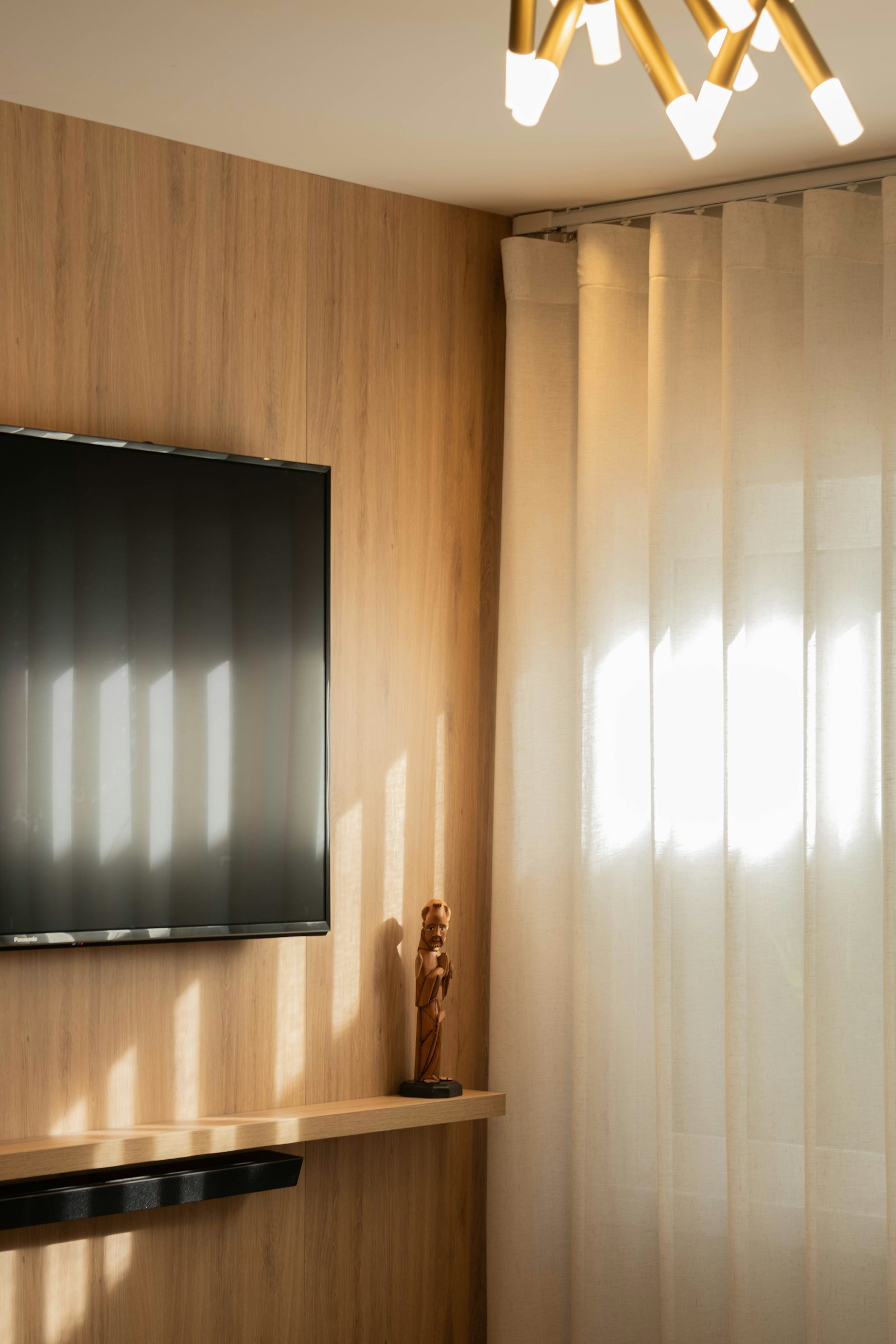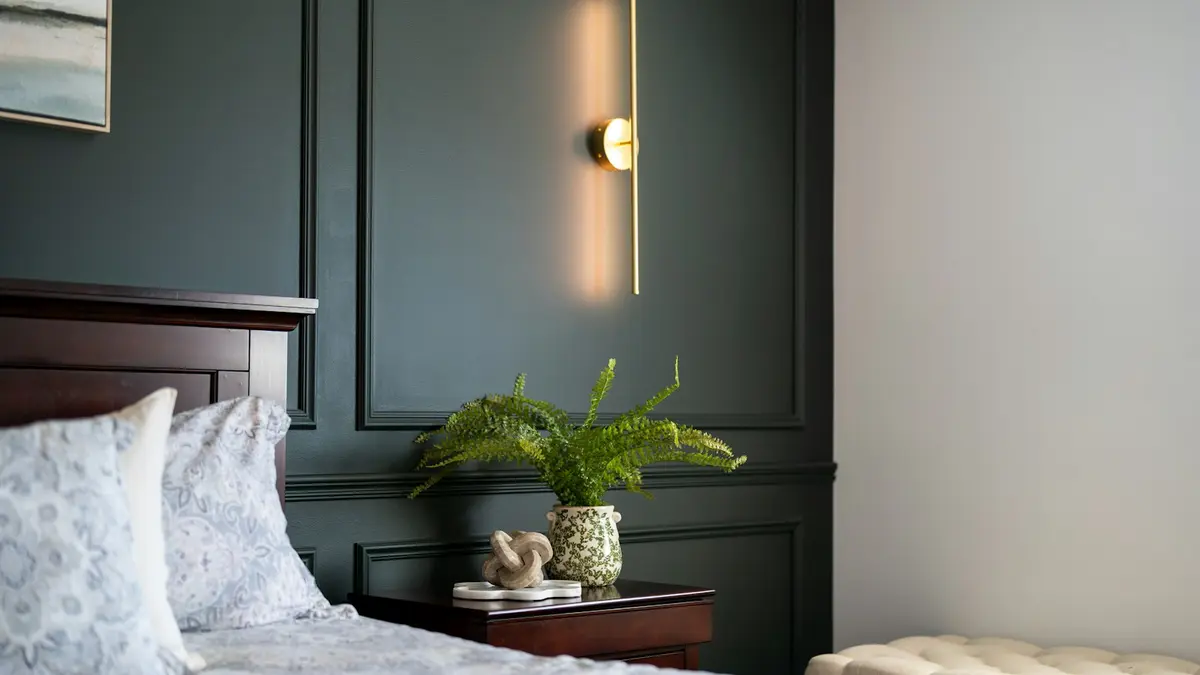
A bedroom corner that looks especially good in afternoon sun usually needs more than a brighter lamp at night. The appealing effect often comes from light arriving at an angle: it catches drawer edges, hardware, wood grain, fabric, and the wall behind the furniture while leaving some areas quieter. To preserve that feeling after sunset, use layered lighting for a bedroom corner rather than trying to reproduce daylight with one strong overhead source.
Start by identifying what the sun is actually doing in your room. Then add a soft general layer for orientation, a directional accent layer for the surfaces daylight makes interesting, and practical bedside light that can be used without lighting the entire room. The goal is not to make night look like afternoon. It is to give the corner the same sense of shape, warmth, and intention.
Read the afternoon light before planning the fixtures
Spend a few minutes looking at the corner when it is at its best. Notice where the sunlight enters, what it touches first, and which details become more visible.
In many bedrooms, side sun creates a sequence rather than even illumination: a bright top plane on the drawer, a small highlight on a handle, a gentle shadow beneath the furniture, and a wall that appears warmer or more textured than it does at midday. Those contrasts are useful design clues.
Ask these questions:
- Does the light mainly brighten the drawer top, the front of the furniture, or the wall beside it?
- Is the attractive part a pool of light, a grazing highlight, or a broad warm wash?
- Does a curtain soften the sun before it reaches the corner?
- Is the bedside drawer used for a lamp, charging, reading materials, or a glass of water?
- Does the corner need to support dressing, reading, or only a calm evening atmosphere?
A lamp aimed straight down at the drawer may make it usable, but it may not reveal the wall or furniture edges that gave the daylight scene its character. Conversely, a bright wall light alone can look decorative while leaving the bedside surface awkward to use. Plan for both qualities separately.
Build the corner in three layers
1. Give the room a quiet ambient base
Ambient light keeps the bedroom navigable and prevents the lit corner from feeling isolated in an otherwise dark room. It should generally be lower and softer than the lighting used for active daytime tasks.
Possible ambient sources include a dimmable ceiling fixture, indirect light reflected from a ceiling or upper wall, or a floor lamp with a shaded, upward component. If the room already has recessed lights, using them at a reduced level may be enough. The important point is to avoid treating the ceiling layer as the only evening lighting.
A centrally placed ceiling fixture distributes light broadly, which is useful for getting dressed or making the bed. But broad downward light can flatten a bedside corner because it reduces the directional contrast that made the afternoon sun appealing. Dimming lets this layer recede once the room no longer needs full brightness.
2. Add an accent that restores direction and depth
Accent light is the layer most likely to preserve the feeling of side daylight. It should come from a position that creates a little modeling on the furniture or wall rather than shining straight toward the room from the corner.
A shaded table lamp placed toward one side of the drawer can create a controlled pool across the top surface and a softer falloff below. A wall sconce can bring light closer to the wall plane, especially where a table lamp would crowd a narrow drawer. A floor lamp positioned slightly in front of, or beside, the corner can also provide an angled wash without taking up the drawer surface.
For a textured wall, artwork, curtains, or a wood cabinet, try to place the accent source so light travels across the surface instead of directly at it. Light that arrives from the side tends to reveal texture and edges. Light aimed squarely at a surface tends to make it appear more uniformly bright.
Keep the beam controlled. An exposed bulb, a bare directional lamp aimed at eye level, or a fixture that reflects in a mirror can introduce glare just where the bedroom should feel restful. A shade, diffuser, shield, or careful aiming adjustment often matters more than adding output.
3. Keep bedside light practical and independently controllable
The bedside layer should work when someone wants to read, find an item in a drawer, or get out of bed without waking another person. This is a separate job from creating atmosphere.
A table lamp is often the simplest bedside corner lighting option when the drawer has enough clear surface area. Choose a proportion that leaves useful room around it; a lamp that consumes the whole top forces everyday objects into visual clutter and can hide the furniture that you want to highlight.
Wall-mounted reading lights and sconces can be helpful where drawer space is limited. A reading light should be aimable or otherwise directed toward the book or pillow area, not toward the other sleeper's face. A wall sconce with a shaded or diffused source can provide a more decorative glow while a separate focused reading light handles the task.
Independent controls are especially valuable in a bedroom. Ideally, the ambient layer, the corner accent, and the bedside task light can be turned on and adjusted separately. That makes it possible to use the corner as a calm visual anchor without committing the whole room to the same brightness.
Choose color and color rendering for the materials in the corner
Warm afternoon sun has color and variation, so a very cool, uniform electric light can make the transition to evening feel abrupt. Many bedrooms suit warm-white light, particularly around bedtime, because it supports a softer visual atmosphere. The most appropriate choice still depends on the room's paint, textiles, wood tones, and the color of adjacent lighting.
Avoid assuming that a stated color temperature will look identical everywhere. Wall paint, shade material, daylight from the window, and the room's surrounding colors can all change the impression of the light. If you are considering a change throughout the bedroom, see our guide to why 3000K lighting can look different in photos.
Color rendering also matters in a corner built around material detail. A light source with better color rendering can make wood, bedding, painted walls, and objects on the drawer look more natural and distinct. It will not create the angle of afternoon sun by itself, but it can help the accent layer retain the visual richness you noticed in daylight. Our overview of what CRI means in lighting explains this specification in more detail.
Use the window treatment as part of the day-to-night plan
Bedroom lighting with afternoon sun is not only an artificial-light problem. Curtains, shades, blinds, and window hardware affect how the corner reads before the lamps are even switched on.
If direct sun is welcome for part of the day but uncomfortable later, a translucent layer can soften the light while preserving the direction that gives the corner depth. An opaque blackout layer may still be useful for sleep, but opening it fully in the afternoon can allow the furniture and wall to receive the side light you enjoy.
At night, avoid placing a lamp where it creates a harsh reflection in the window. This is common with exposed bulbs and fixtures that face the glass directly. Moving the lamp slightly inward, lowering its brightness, or using a shaded source can reduce the reflected glare.
A simple evening scene to aim for
For most bedrooms, an effective nighttime lighting scene is restrained:
- Turn on a low ambient layer so the room is easy to move through.
- Switch on an angled lamp or wall light that gives the drawer, wall, or nearby curtain some depth.
- Use focused bedside lighting only when reading or doing another close task.
- Dim or turn off the accent and task layers when it is time to sleep.
This arrangement gives the corner a presence without making it the brightest point in the room. It also avoids the common problem of using a reading lamp as the room's entire evening light source.
Common mistakes in a sunny bedroom corner
Trying to replace sun with maximum brightness
More light does not necessarily recreate the feeling of daylight. Strong, evenly distributed artificial light often removes the shadows and subtle transitions that made the corner look good. Prioritize direction, shielding, and control before increasing brightness.
Putting every light source above the corner
Overhead fixtures are useful, but a corner lit only from above can look disconnected from the side-lit effect of afternoon. Add at least one source at a lower level or on a nearby wall.
Using a lamp that is visually larger than the furniture
A large lamp can dominate a small bedside drawer and block the surface it is meant to illuminate. In a compact corner, wall-mounted light or a slim floor lamp may be more appropriate than a broad table lamp.
Installing a fixed wall light without planning controls
A hardwired sconce may be convenient, but its value depends on how easily it can be used from bed and whether it can be dimmed appropriately. Before changing fixed wiring, consider switch location, compatibility with the planned controls, and how the fixture will be serviced. Have a qualified electrician handle new wiring and verify current local requirements.
Mixing unrelated light colors in view of the bed
A warm bedside lamp beside a noticeably cooler ceiling fixture can make a small corner look accidental. The contrast may be intentional in some rooms, but it should be visible in a test scene before committing to permanent fixtures.
A flexible plan for the corner
If you want a straightforward starting point, retain your existing ceiling light as the ambient layer, add one shaded or shielded accent source that approaches the drawer or wall from the side, and use a separate adjustable bedside light for reading. Put the layers on separate controls wherever possible.
For a guest room, simpler controls and a table lamp may be sufficient. For a primary bedroom, the added flexibility of dimming and independently controlled bedside lighting is often more useful over time. For more general planning ideas, see guest bedroom lighting ideas.
The best bedroom corner lighting does not compete with the afternoon sun. It borrows its underlying qualities: an off-center direction, enough contrast to show materials clearly, and a calm level of brightness that makes the corner feel considered after dark.