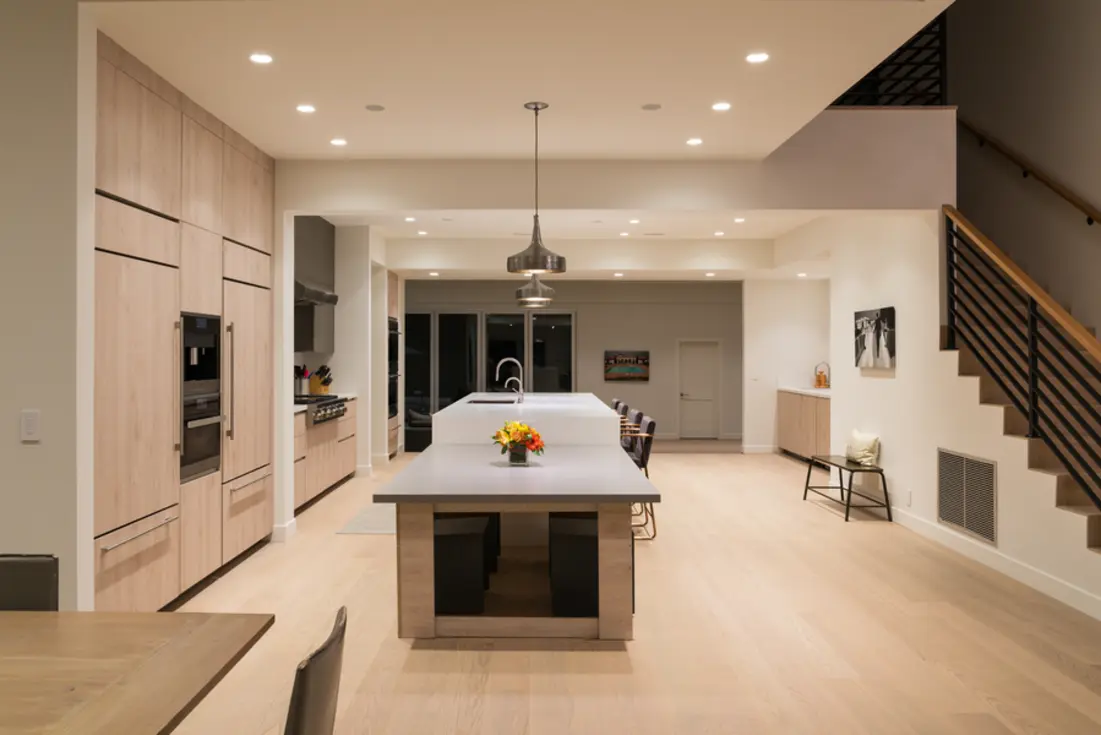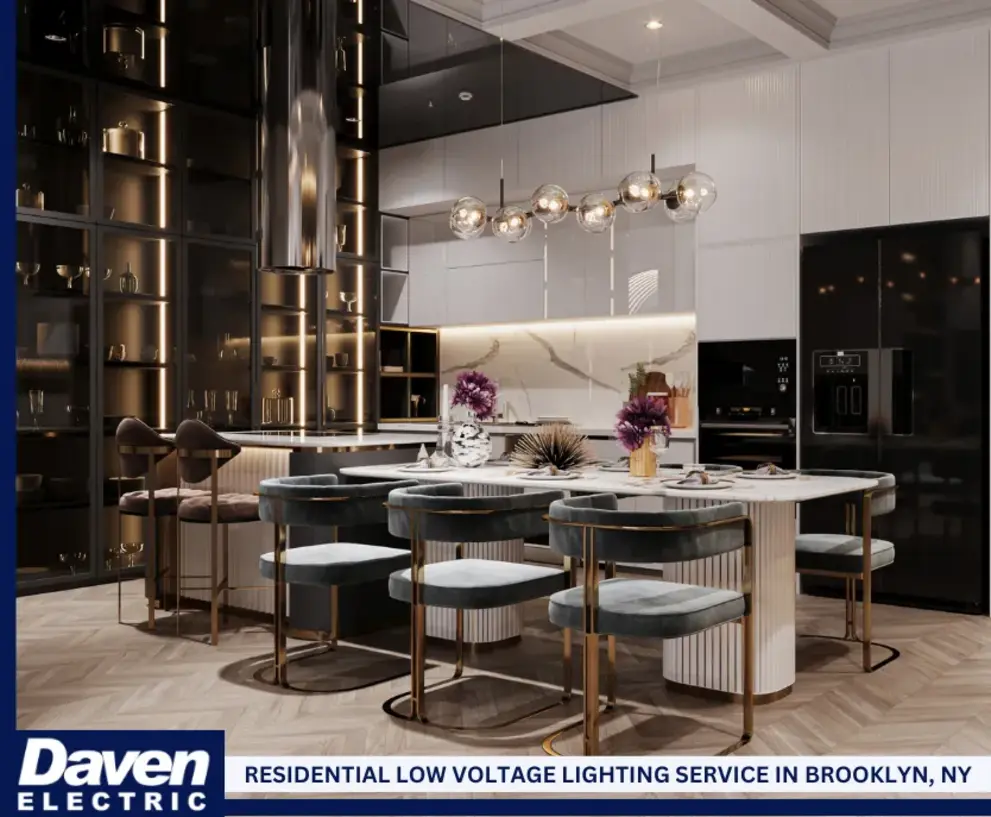
Low-voltage lighting for a new house can be a practical way to centralize LED power supplies, use smaller or more discreet fixtures, and keep more electronic components accessible for future service. It is not, however, a universal replacement for ordinary residential lighting circuits. It adds a second distribution system, requires careful load and voltage-drop planning, and can limit fixture choices if the design is not well documented.
For most new homes, the strongest case is not an all-or-nothing conversion. Low-voltage LED home lighting is especially useful for concealed linear lighting, under-cabinet light, toe-kick light, shelving, coves, millwork, and selected architectural downlights. A conventional mains-voltage lighting layout often remains simpler for standard decorative fixtures, ceiling fans with lights, exterior fixtures, and locations where future fixture flexibility matters most.
What “low voltage” means in a house
A conventional lighting layout brings mains power through branch circuits to ceiling boxes, junction boxes, luminaires, or fixture-mounted LED drivers. The fixture or its driver then converts that power into what the LEDs need.
In a low-voltage approach, a listed power supply or driver converts mains power at a separate location. Low-voltage cable then carries power from that supply to compatible LED fixtures. Depending on the system, the fixtures may use low-voltage DC or another manufacturer-specific low-voltage arrangement.
The important distinction is not simply that LEDs are involved. Nearly every LED ultimately operates at low voltage internally, but not every LED fixture is designed to receive low-voltage power from a remote central location. A typical line-voltage recessed light or decorative pendant generally cannot be connected to a low-voltage distribution run unless its manufacturer specifically designs it for that system.
What a centralized low-voltage lighting system changes
A centralized low-voltage lighting design moves a portion of the system out of the room and into accessible equipment locations. These may be utility closets, mechanical rooms, dedicated cabinets, or other approved service spaces selected during planning.
Instead of placing a small driver above each recessed light or inside each fixture, one or more remote power supplies may serve a group of compatible lights. This can change several parts of the build.
More planning before walls are closed
The electrical plan needs to identify each fixture family, its input requirements, expected wattage, cable routes, control method, and power-supply location. It is much harder to make these decisions after drywall because cable size and route length affect performance.
A conventional layout is comparatively forgiving: a future fixture can often be selected from a broad range of products designed for the existing ceiling box and branch circuit. A low-voltage run serves only fixtures compatible with its voltage, power type, dimming method, and listed system.
Drivers may be easier to reach
Remote drivers are often proposed to avoid burying electronics above ceilings. That can be a real maintenance advantage when the drivers are installed in a genuinely accessible location with sufficient room for inspection and replacement.
But centralization does not eliminate maintenance. It relocates it. The homeowner still needs a clear way to identify which driver serves which room or fixture group. A cabinet full of unlabeled power supplies, controls, and low-voltage runs can be harder to diagnose than one failed fixture.
More cable management and system coordination
Low-voltage lighting may use different cable types and routing practices from ordinary branch-circuit wiring. It needs coordination with framing, insulation, cabinetry, HVAC, audiovisual wiring, and smart-home controls.
The primary side of the power supply is still connected to mains power. The secondary side may be lower voltage, but the complete installation must be designed and installed according to the equipment instructions and applicable local rules. Ask the electrician and lighting designer to confirm the required wiring methods, separation from other services, enclosure needs, and access provisions for your jurisdiction.
The practical advantages
Low-voltage lighting can be particularly compelling when the architecture calls for lighting that ordinary fixtures do not handle elegantly.
Smaller, more discreet lighting details
A remote-driver system can support thin linear profiles, cabinet lighting, shelf lighting, concealed uplight channels, and compact accent fixtures without placing a driver inside every visible element. This is useful when millwork and ceiling details are intended to look quiet rather than fixture-heavy.
Better service access in selected applications
For a run of under-cabinet lighting or a cove with several LED modules, placing the driver in an accessible cabinet, closet, or equipment area can simplify eventual replacement. The result depends on good access and whether the system uses components that can still be obtained years later.
Flexible control possibilities
Some systems support centralized dimming, scene control, tunable-white lighting, or automation through compatible controls. These capabilities are not exclusive to low voltage; conventional line-voltage lighting can also be controlled very effectively. The advantage is that a purpose-designed low-voltage system may integrate fixture power and control more cleanly for large groups of architectural lighting.
Useful for long runs of integrated light
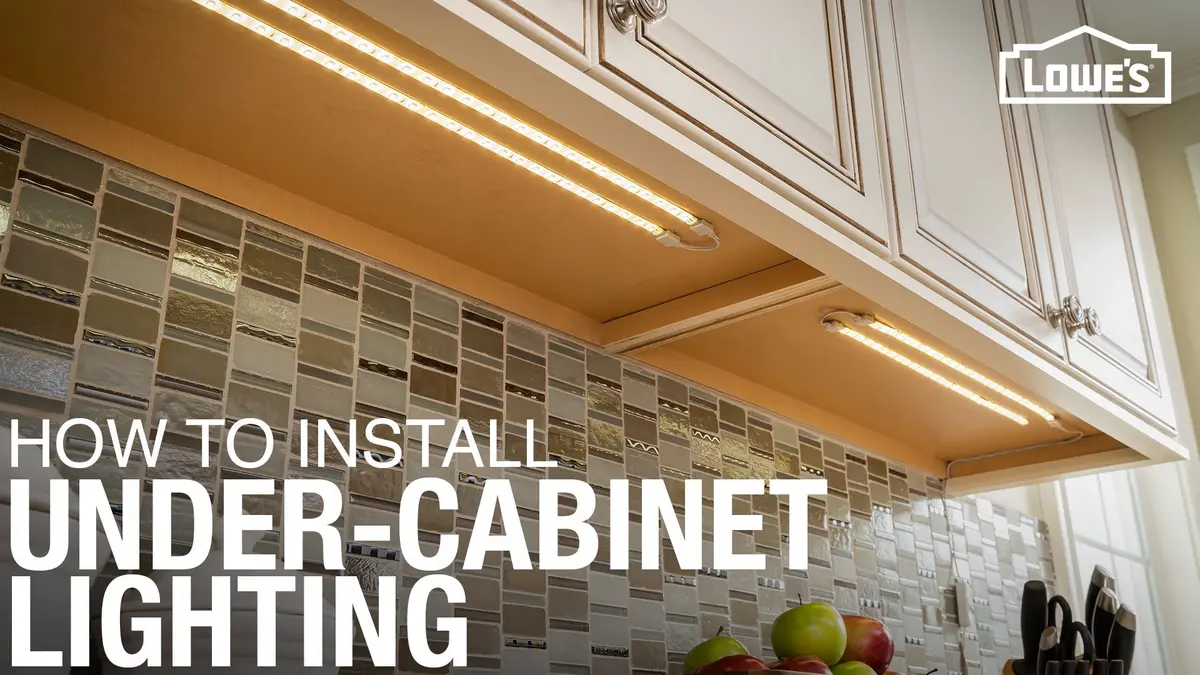
Linear LED lighting is one of the clearest uses for low voltage. It is commonly used under cabinets, inside cabinets, beneath vanities, in coves, and around built-ins. The lighting can be continuous and visually restrained, provided the tape, channel, wire, power supply, dimmer, and connectors are designed to work together.
For more on locating this kind of lighting, see our guide to where to mount under-cabinet LED strips.
The limitations that matter in a whole-home plan
The main drawback is not that low voltage is inherently unreliable. It is that a whole-home system is more specialized than a standard lighting layout.
Voltage drop becomes a design issue
At lower voltage, cable resistance has a larger effect on performance. Long cable runs, undersized conductors, overloaded runs, or poorly planned connections can lead to dimmer light, uneven output, or color differences toward the end of a run.
This is especially important for linear lighting, where a long run may appear brighter at one end. Designers address this through run lengths, cable sizing, power-injection strategy, fixture specification, and power-supply placement. These are system-specific calculations, not details to guess during installation.
A failed central component can affect several lights
A fixture-mounted driver failure generally affects one fixture. A centralized driver can serve a room, a cabinet bank, or multiple lighting zones. That may make replacement easier, but it can also create a larger dark area when one component fails.
A sensible design breaks the house into understandable zones rather than concentrating too much lighting on one supply. It should also leave reasonable capacity for the intended loads without treating extra capacity as a substitute for a complete plan.
Fixture replacement may be less straightforward
With conventional branch-circuit lighting, future owners can often change a pendant, sconce, or ceiling fixture without understanding the original lighting scheme. In a low-voltage system, a replacement fixture must be electrically compatible with the supply and controls already in place.
This matters most for visible decorative fixtures. Styles change, and homeowners commonly replace dining pendants, hallway fixtures, sconces, and bedroom lights long before a house reaches the end of its life. Keeping these on conventional, well-documented connections usually preserves more freedom.
It can complicate a renovation
Low voltage lighting renovation work is possible, particularly in accessible cabinets, basements, crawlspaces, or open ceilings. But retrofitting centralized wiring through finished walls can be disruptive. A renovation may be better served by targeted low-voltage systems for cabinetry or coves while retaining existing branch-circuit lighting for general room illumination.
Where low voltage usually makes the most sense
Consider a low-voltage system when several of these conditions apply:
- The house includes substantial custom millwork, coves, shelving, or concealed linear lighting.
- You want drivers located where they can be serviced without opening finished ceilings.
- The lighting plan is being developed early enough to coordinate routes, equipment cabinets, and controls.
- A lighting designer or experienced electrical team can specify a complete compatible system.
- You are comfortable documenting the system for future owners and trades.
- The same fixture family will be used across enough locations to justify the extra planning.
It is often less compelling when the home mostly uses standard recessed lights, decorative pendants, sconces, ceiling fans, and ordinary exterior fixtures. In that case, conventional branch-circuit lighting with carefully chosen fixtures and dimmers may deliver the same visual comfort with easier future substitutions.
A sensible hybrid approach for new construction
For many custom homes, the practical answer is a hybrid plan:
- Use conventional lighting connections for decorative fixtures, common recessed lighting, fans, and adaptable ceiling boxes.
- Use low voltage for under-cabinet lighting, toe-kick light, interior cabinet light, coves, niche light, built-ins, and other integrated details.
- Keep drivers accessible, cool, protected as required, and clearly labeled.
- Separate lighting zones by room and function so a single failure does not disable too much of the house.
- Preserve drawings showing fixture models, driver locations, cable routes, control types, and spare capacity.
This approach captures the strengths of low voltage where it is most useful without turning every ceiling fixture into a specialized dependency.
Questions to settle before approving the electrical plan
Ask the designer, electrician, and low-voltage lighting supplier to answer these questions in writing:
- Which fixtures are low-voltage-only, and which will remain on standard lighting connections?
- Where will every driver or power supply be located, and how will it be accessed later?
- Which fixtures, cables, drivers, dimmers, and controls are approved to work together?
- How have cable lengths and voltage drop been planned for each run?
- What happens if one driver fails, and which lights will be affected?
- Can a future owner replace a visible fixture without redesigning the circuit?
- What drawings, labels, and spare parts information will be handed over at completion?
- How will the system meet current local electrical, fire-safety, and location-specific requirements?
The bottom line
Low-voltage lighting new construction is most valuable as an architectural lighting strategy, not simply as an alternative way to power every lamp in the house. It can make integrated LED details cleaner, reduce the number of inaccessible fixture drivers, and support sophisticated controls when it is planned as a complete system.
For a whole-home solution, its tradeoff is specialization. You gain central serviceability and design flexibility in selected applications, but you need better documentation, compatible components, thoughtful driver locations, and professional planning for cable runs and controls. A hybrid layout usually gives a new home the most durable result: low voltage where it improves the architecture, conventional connections where future flexibility matters.
References
- Anyone tried low voltage lighting in a new house. (n.d.). https://www.reddit.com/r/HomeImprovement/comments/rhsqlo/anyone_tried_low_voltage_lighting_in_a_new_house
- Low Voltage System for entire home. (n.d.). https://www.bogleheads.org/forum/viewtopic.php?t=419599
- Low Voltage vs Line Voltage Lighting - LED Artistry. (n.d.). https://led-artistry.com/2026/06/28/low-voltage-vs-line-voltage-lighting
- Standard Vs. Low-Voltage LED Lighting. (n.d.). https://www.environmentallights.com/standard-vs-low-voltage
- Low Voltage Lighting Systems: Current Trends - EVstudio. (n.d.). https://evstudio.com/low-voltage-lighting-systems-current-trends
- Residential Lighting under the NEC® — Why lighting isn’t located in one spot – IAEI Magazine. (n.d.). https://iaeimagazine.org/electrical-fundamentals/residential-lighting-under-the-nec-why-lighting-isnt-located-in-one-spot
- Low Voltage Lighting: The Electrician's Guide to LED Strips. (n.d.). https://www.linkedin.com/pulse/low-voltage-lighting-electricians-guide-led-strips-aspectled-64nke
- Top 5 Benefits of Low Voltage Wiring for Residential Buildings. (n.d.). https://wolverinelowvoltage.com/blog/benefits-of-low-voltage-wiring