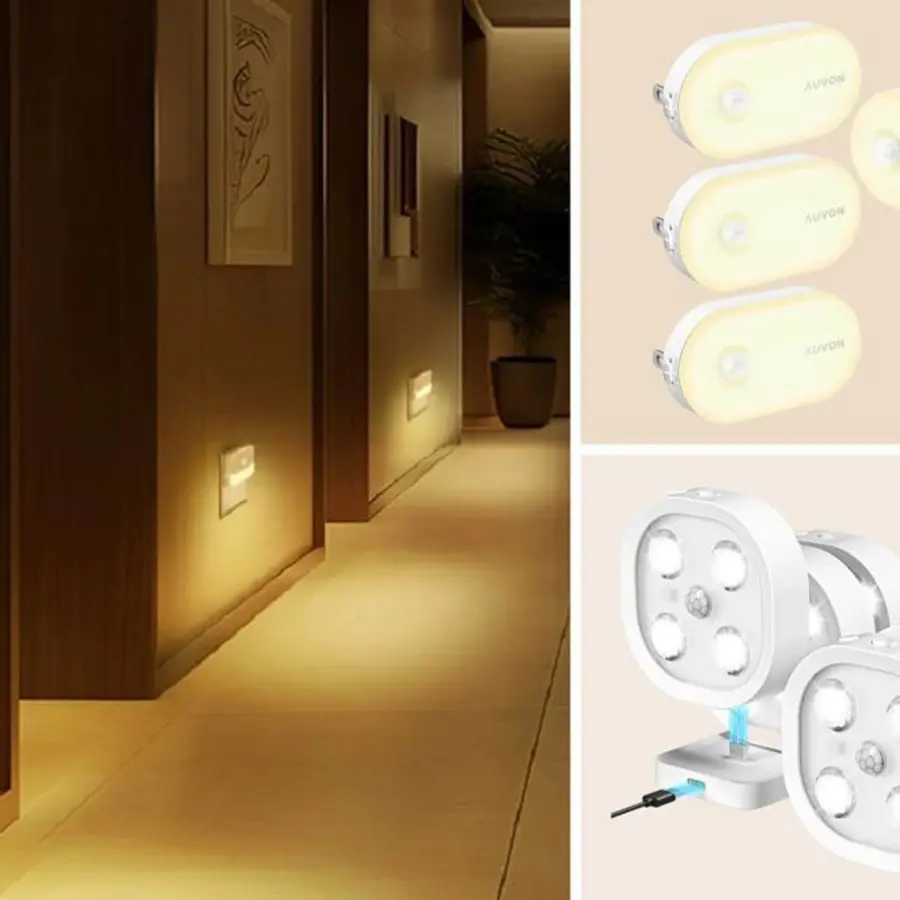
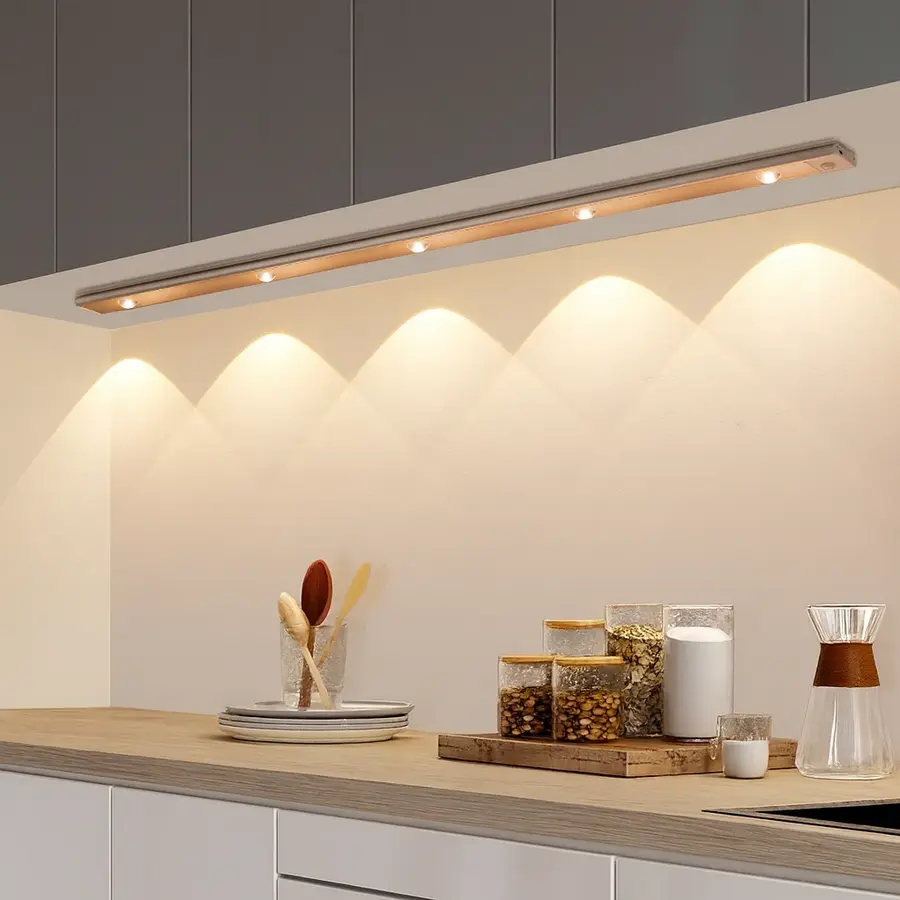
For an under-vanity night light, an ordinary motion sensor can work well if it has a long enough hold time and is positioned to detect movement as a person enters and leaves. It is not the best choice if the same sensor must reliably keep the light on while someone is seated, showering, or otherwise nearly still. In those cases, a presence sensor—or a separate manual control—is the more dependable approach.
The most practical setup is usually a dedicated, very dim toe-kick light scene rather than a sensor controlling the main bathroom lighting. Use a low-output LED strip or purpose-made linear fixture beneath the vanity, set it to operate only at night, and choose controls based on how the bathroom is actually used.
The key difference: motion is not presence
Most inexpensive under-vanity lighting motion sensor kits use a PIR sensor. PIR means passive infrared. It detects changes in infrared energy as a warm person moves across its detection zones. Walking into the bathroom, turning toward the vanity, or stepping away from the toilet is usually enough to trigger it.
What PIR does not reliably detect is a person who remains largely still. A seated occupant may make only small movements, and those movements may not cross enough detection zones for the sensor to register them. The light can then switch off after its programmed timeout even though the room is occupied.
A presence sensor is designed to address that problem. Depending on its design, it may detect much finer movement than a conventional PIR sensor. Some presence sensors use radar-based sensing rather than passive infrared, allowing them to notice small body movement that a PIR sensor can miss.
That added sensitivity is useful, but it also creates a tradeoff: a presence sensor may react to movement beyond the intended area, such as activity in an adjacent hallway, movement through a partially open door, or, in some layouts, water movement behind a shower curtain. Sensor quality, aiming, and settings matter as much as the label on the box.
Motion sensor vs presence sensor at a glance
| Feature | PIR motion sensor | Presence sensor |
|---|---|---|
| Best at detecting | Walking and obvious body movement | Movement plus relatively still occupants |
| Typical use | Short visits and simple pathway lighting | Bathrooms where occupancy must be maintained reliably |
| Risk of switching off while seated | Higher | Lower, though not always eliminated |
| Risk of false activation | Usually lower when aimed well | Can be higher if sensitivity is excessive |
| Setup complexity | Usually simple | Often needs more adjustment and careful placement |
| Best role under a vanity | Night pathway light with a sensible timeout | Low-level light that must remain on during occupancy |
When a PIR motion sensor is enough
A PIR sensor is often the sensible choice for a bathroom toe-kick night light when the goal is simply to provide safe orientation during brief overnight visits. It does not need to prove that every person is still present at every moment. It only needs to light the floor before someone takes a few steps in a dark room.
Choose a PIR setup when these conditions apply:
- The under-vanity light is a secondary night light, not the room's only illumination.
- The main bathroom lights remain available at a wall switch.
- The sensor can see people entering the room rather than being hidden under a deep vanity overhang.
- A timeout of several minutes is acceptable.
- The household is comfortable with the light occasionally needing to be retriggered by a foot movement or hand wave.
For this use, a longer hold time is often more useful than an ultra-sensitive sensor. A light that stays on for a moderate period after the last detected movement is not especially wasteful when it is a small, dim LED load. It is generally better to let a low-level pathway light remain on briefly than to make it so aggressive that it turns off at the wrong moment.
Start with a longer timeout, then reduce it if needed
Do not assume the shortest timeout is the most efficient setting. A very short delay may be frustrating if someone pauses at the sink, uses the toilet, or enters the bathroom in stages.
For a toe-kick night light, begin with a hold time long enough to cover a typical visit without demanding constant movement. Then observe the behavior over several nights. If it remains on long after everyone has left, shorten the delay gradually. If it switches off during ordinary use, lengthen it before replacing the sensor.
A PIR sensor can be a poor fit when its maximum timeout is very short or when that timeout cannot be adjusted. This is common with compact battery-operated lights and some integrated under-cabinet fixtures. A separate sensor and LED driver generally provide more control than a self-contained stick-on light.
When a presence sensor is the better answer
Choose a presence sensor when the under-vanity light is intended to remain on whenever the bathroom is occupied, including during periods of limited movement. This is particularly useful in a primary bathroom, an accessible bathroom, or any room where a sudden return to darkness would be disruptive.
A presence sensor is worth considering if:
- Someone may be seated and still for longer than a motion-sensor timeout.
- The bathroom is used at night without turning on overhead lighting.
- The toe-kick light is part of a wider automated bathroom scene.
- A shower or toilet area needs reliable occupancy detection.
- You are willing to adjust sensitivity, detection range, and timeout after installation.
Do not assume that every product described as an "occupancy sensor" is a true still-presence sensor. Some products use that term for a conventional PIR sensor with an adjustable timeout. Read the operating description closely. Look for clear information about the sensing method, sensitivity adjustment, detection area, and whether the device is intended to detect minor movement.
Put the light under the vanity, but do not necessarily put the sensor there
An under-vanity LED strip is often visually discreet because the vanity itself hides the source. The sensor is harder to conceal successfully. A sensor installed far under the cabinet may have its view blocked by the vanity face, plumbing, drawers, or the user's body as they approach.
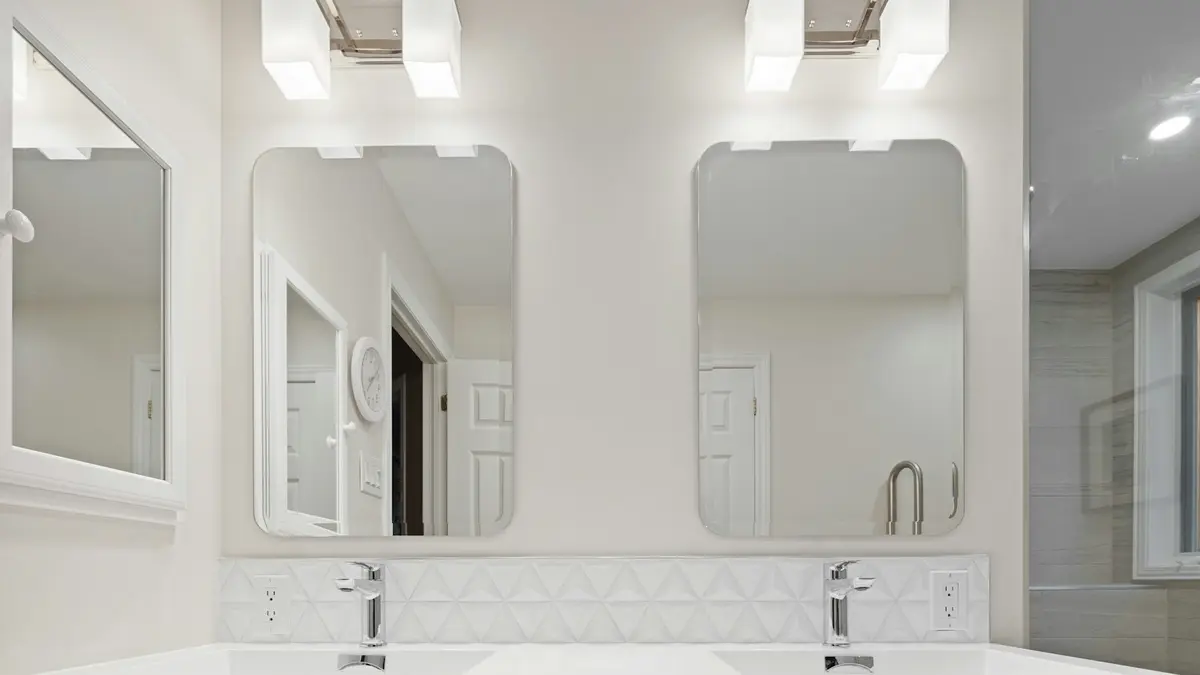
For dependable triggering, place the sensor where it can detect someone entering the bathroom or approaching the vanity. That may mean a sensor at the vanity edge, on a nearby wall, at the doorway, or integrated into a broader lighting-control system.
Before committing to a location, consider these questions:
- Can the sensor see the entry path without being blocked by the vanity?
- Will it detect movement in a nearby hall and turn on unnecessarily?
- Is the toilet in a blind spot?
- Could it detect people passing an open doorway?
- Is the shower curtain, fan airflow, or reflective surface likely to complicate sensing?
A sensor with adjustable sensitivity and detection range gives more room to correct these issues. Fixed-sensitivity sensors are simpler, but they can be difficult to tune for an unusual layout.
Build a night-light scene, not an all-night decorative glow
Leaving decorative under-vanity lighting on all night is one solution, but it is not necessary for most bathrooms. A controlled night-light scene is usually more comfortable and more intentional.
The useful scene has four characteristics:
- Low output: The light should reveal the floor, toilet, and route through the room without making the bathroom feel fully lit.
- Warm appearance: A warmer light is usually less jarring during overnight use than a cool white source.
- Limited area: Keep the light low and indirect. Under-vanity illumination works because it lights the floor plane rather than shining directly into the eyes.
- Night-only operation: If possible, use a daylight or time condition so the toe-kick light does not activate unnecessarily in a bright room during the day.
A separate under-vanity circuit or smart control is especially useful here. It lets the toe-kick strip operate at a low nighttime level while the vanity, mirror, and ceiling lights remain available at normal brightness when needed.
For more planning ideas, see our guide to under-cabinet lighting that activates only at night. The control principles are similar even though the mounting location is different.
A practical control strategy for most bathrooms
For many households, the following arrangement balances simplicity and reliability:
- Install a dimmable under-vanity LED strip or low-output linear light.
- Control it independently from the main bathroom lighting.
- Use a PIR sensor aimed toward the entry path.
- Set a longer hold time than you would use for a closet light.
- Add a daylight condition or schedule so it activates only at night.
- Keep a normal wall switch or manual override available.
If the light must remain on while a person is seated or showering, replace the PIR portion of that strategy with a properly configured presence sensor. Alternatively, use the sensor only to start the night-light scene and provide a simple manual way to extend or hold the light on.
This avoids relying on one sensor to solve every bathroom task. The automated light handles safe entry; the main lights and manual controls handle grooming, cleaning, bathing, and longer visits.
Common selection mistakes
Choosing a sensor based only on detection distance
A long detection range does not guarantee good bathroom performance. The important question is whether the sensor can see the relevant movement at the needed angle. A sensor may detect a person several feet away in an open room yet miss someone directly below it or behind a vanity edge.
Using a short fixed timeout
A short timeout may be acceptable for a hallway or closet, but it is often frustrating in a bathroom. If the fixture offers no adjustable delay, consider whether it is suitable for anything beyond a brief pathway light.
Expecting a PIR sensor to detect stillness
A PIR can be reliable for entry and exit but unreliable for quiet occupancy. If staying on during still periods is essential, choose a genuine presence sensor or use a manual override.
Making the toe-kick light too bright
An under-vanity night light should not function like the room's daytime lighting. Excessive brightness defeats its purpose, causes glare from pale floors or glossy tile, and can make returning to sleep more difficult.
Forgetting service access and bathroom suitability
LED strip drivers, connectors, and sensors eventually may need inspection or replacement. Plan an accessible location rather than burying components where they cannot be reached. Bathroom electrical and wet-area requirements vary by location and by the fixture's position relative to water sources. Verify current local requirements and use a qualified electrician for mains-powered installation or any work that affects fixed wiring.
The bottom line
Use a PIR motion sensor for a simple bathroom toe-kick night light when a longer timeout and occasional retriggering are acceptable. It is economical, straightforward, and well suited to lighting the first few steps into the room.
Use a presence sensor when the light must stay on for a person who may be seated or largely still. It requires more careful setup, but it better addresses the specific concern that a conventional motion sensor may time out during occupancy.
Whichever sensor you choose, keep the under-vanity light dim, warm in appearance, independently controlled, and available only when it is genuinely useful. That creates a calm nighttime path without turning decorative lighting into an all-night obligation.
References
- Under vanity lighting for bathroom? : r/Lighting. (n.d.). https://www.reddit.com/r/Lighting/comments/1phqywa/under_vanity_lighting_for_bathroom
- Motion Sensor Bathroom Light India: PIR & Occupancy Lighting Guide (2026) — Hands-free PIR and occupancy sensors that switch bathroom lights on when you walk in and off when you leave — how they save energy, a dim night-light mode for 3 a.m. trips, sensor placement, timeout, false triggers, ceiling vs switch sensors, wiring, LED compatibility and honest rupee ranges. | Studio Matrx. (n.d.). https://www.studiomatrx.org/guides/motion-sensor-bathroom-lighting-india
- Bathroom lights turn off due to motion sensor. (n.d.). https://www.facebook.com/groups/869651420073723/posts/2875563309482514
- Motion sensor night light under floating vanity | Houzz Forum. (n.d.). https://www.houzz.com/discussions/6025852/motion-sensor-night-light-under-floating-vanity
- Turn on a dim bathroom light at night. (n.d.). https://www.homeautomationcookbook.com/automation/lighting/bathroom-night-light.html
- Motion Sensor Light Bathroom. (n.d.). https://www.pinterest.at/ideas/motion-sensor-light-bathroom/934994754557
- News about Motion Sensor Night Light, under canbinet light, Silicone Night Light - Guangdong Huari Lighting Co.,Ltd. (n.d.). https://www.huarilighting.com/news
- Solution to the I'm in the shower so the motion detector .... (n.d.). https://www.reddit.com/r/HomeKit/comments/gu2e3o/solution_to_the_im_in_the_shower_so_the_motion