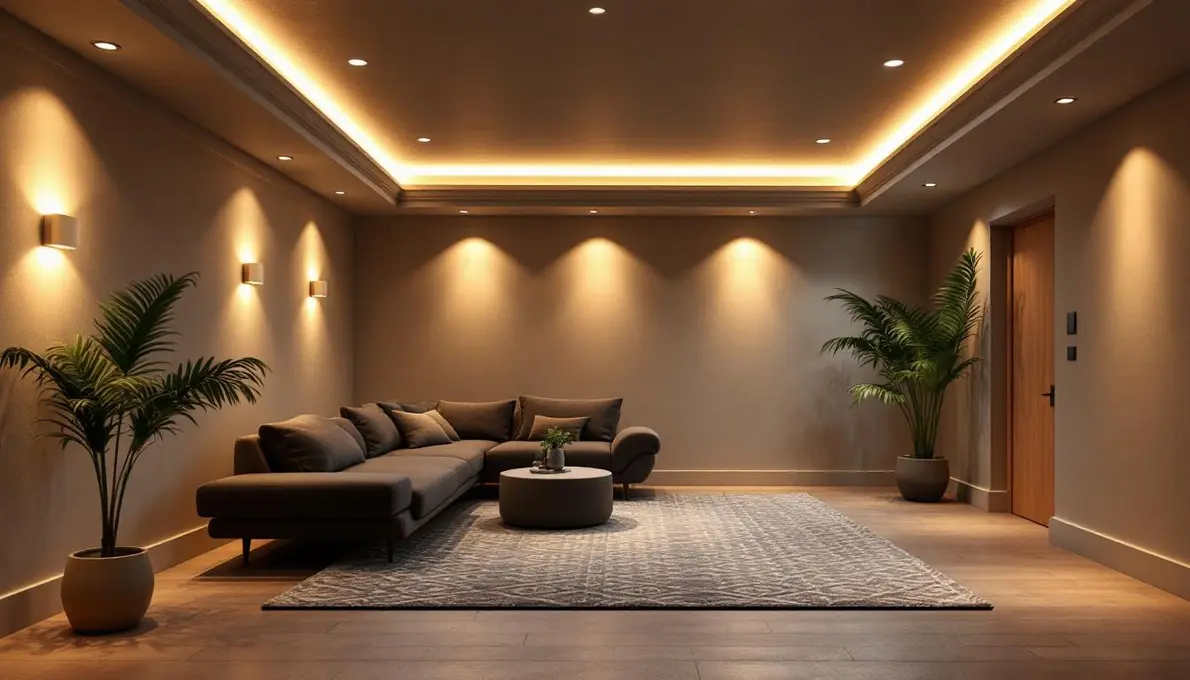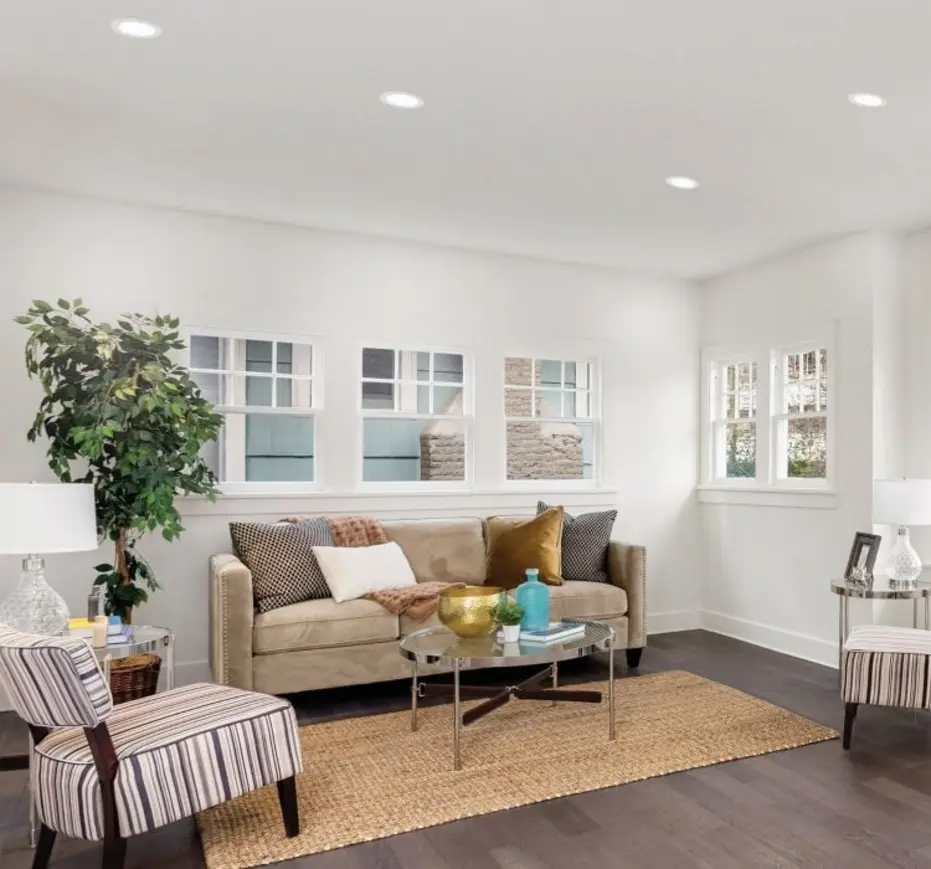
Recessed lights in a family room are useful when the room needs reliable whole-room visibility, flexible brightness for different activities, or focused light on walls, shelving, and artwork. They are not essential simply because the room has a ceiling. In many family rooms, sconces, table lamps, floor lamps, and one decorative ceiling fixture provide a more comfortable everyday result.
The key question is not, “Will recessed lights make the room brighter?” They almost always will. Ask instead: “What will these lights illuminate that my other layers cannot?” If you cannot name a purpose for each downlight, a large ceiling grid is likely to make the room feel flatter, brighter, and less restful than intended.
Start with how the room is actually used
A family room often has competing needs. It may be a place to watch television at night, read in one corner, play board games, fold laundry, host guests, or clean after children and pets. No single fixture type handles all of those situations gracefully.
Recessed downlights are most helpful when they solve one or more of these needs:
- Cleanup and active-use light: Enough general light to vacuum, find dropped items, sort toys, or use the room during a darker afternoon.
- Even coverage in a large room: A broad room with few places for lamps may otherwise have dim circulation areas or dark corners.
- Architectural or display lighting: Adjustable fixtures can direct attention to a fireplace surround, artwork, bookcases, a textured wall, or open shelving.
- A low-profile ceiling solution: A room with a low ceiling, a fan, exposed views, or limited room for a pendant may not suit a large central fixture.
- Flexible scenes: Separate dimmers can make a brighter, practical setting available without forcing the room to feel brightly lit every evening.
They are less necessary when the family room is primarily used for relaxing and television, has good lamp locations, and already includes sconces or a central decorative fixture. In that setting, adding many ceiling downlights can create light where it is least welcome: directly above seated people and on the television wall.
Think in layers, not fixture counts
A comfortable family room usually needs several light sources at different heights. This is often called layered lighting: ambient light for general orientation, task light for activities, and accent light for visual emphasis.
| Lighting layer | Family room purpose | Useful fixture types |
|---|---|---|
| Ambient | Lets people move around and see the room generally | Decorative ceiling fixture, wall sconces, indirect lighting, a small number of recessed lights |
| Task | Supports reading, games, crafts, or laptop use | Floor lamps, table lamps, swing-arm wall lamps |
| Accent | Adds depth and directs attention | Picture lights, shelf lighting, sconces, adjustable recessed lights |
Recessed lights can serve ambient or accent roles, but they are rarely the best task light for a sofa, chair, or game table. Light from directly overhead can cast shadows from a person's head and hands onto a book, puzzle, or lap. A nearby lamp generally gives better control and a more pleasant reading environment.
For a room with no ceiling fixture, recessed lights may be a practical ambient layer. For a room with a chandelier, flush mount, or ceiling fan light, they may instead be a secondary layer used only when extra visibility is needed. If your room has neither ceiling lighting nor accessible outlets for lamps, adding a modest recessed layer can be more useful than trying to make a single decorative fixture do everything. See our guide to living room lighting with no ceiling light for other approaches.
A simple decision test
Before planning a family room recessed lighting layout, walk through these questions.
Add recessed lights if you answer yes to two or more
- Do you regularly need the entire room bright enough for active use or cleaning?
- Are there areas that lamps and sconces cannot reach, especially circulation paths or a large central seating area?
- Do you want to light art, built-ins, a fireplace wall, or another feature from above?
- Will all recessed lights be on a separate dimmer from sconces, lamps, and decorative fixtures?
- Can you explain the purpose of every proposed fixture?
If the answer is yes mostly because “the ceiling looks empty,” pause before installing them. An empty ceiling is not a lighting problem. It may be the visual calm that allows decorative fixtures, furniture, art, and daylight to carry the room.
Use fewer fixtures with clearer jobs
The most common mistake is treating a family room like a kitchen, where broad overhead coverage is often necessary for food preparation. A family room generally benefits from a less uniform approach.
Instead of laying out a strict wall-to-wall grid, begin with the room's zones:
- Seating and conversation area
- Television wall
- Reading chair
- Fireplace or focal wall
- Built-ins or display shelves
- Paths into adjoining rooms
Then decide whether a recessed fixture would improve each zone. For example, a pair of adjustable downlights can wash a bookcase or artwork, while a small, dimmable group may provide general light over an open central area. A reading chair may need a floor lamp rather than another ceiling fixture.
A symmetrical ceiling pattern can still be appropriate in a simple rectangular room, but symmetry should support the lighting plan rather than replace it. Avoid placing lights merely because they complete a row. If a fixture would shine into the television viewing area, create glare on a glossy surface, or produce little useful illumination, omit it.
For wider layout principles, see how to plan a recessed lighting layout.
Plan around the television before the ceiling grid
Television viewing is one of the strongest reasons to be restrained with recessed lights. Bright downlights aimed toward the screen wall can reflect in the display, increase perceived contrast between screen and room, and make a relaxed viewing setting feel clinical.
A useful family-room control plan often separates lighting into at least three groups:
- Recessed general lighting: Used for active tasks, guests, or cleanup.
- Decorative lighting: Sconces, a chandelier, or a ceiling fan light for a softer overall setting.
- Lamps and accent lighting: Used for reading, background glow, and television viewing.
Dimming matters as much as fixture placement. A recessed layer that looks excessive at full output may be valuable when set much lower. However, do not rely on dimming to rescue a poor layout. Fixtures that produce direct glare, unwanted screen reflections, or harsh pools of light will still be noticeable at lower levels.
If recessed lights will be near a screen, a separate control is especially helpful. Our guide to separate dimmers for recessed lights near a TV explains why independent zones make the room easier to use.
Choose low-glare recessed fixtures
Not all recessed fixtures look or feel alike. For a family room, prioritize visual comfort over maximum output.
Look for these characteristics:
- A recessed light source: The glowing part of the fixture sits higher inside the ceiling opening rather than close to flush with the ceiling plane.
- A deeper, darker interior: This helps reduce the impression of a bright disk overhead.
- A wider, softer distribution for general lighting: Very narrow beams can create distracting spotlit circles unless they are intentionally aimed at art or architecture.
- Adjustability where aiming matters: A gimbal or adjustable fixture can be useful for artwork, shelves, or walls, but it should be aimed carefully so the lamp itself is not visible from the sofa.
- Dimming that works well at low levels: Test compatibility between the fixture, driver, and dimmer before final installation where possible.
Ceiling height affects glare. In an 8-foot room, a bright, shallow fixture is closer to seated eye level and can be more noticeable than the same fixture in a taller room. A lower ceiling is another reason to use fewer downlights and choose fixtures designed for better shielding. Read more in our guide to low-glare recessed lights for 8-foot ceilings.
Color temperature and color rendering
For a relaxed family room, keep the lighting color consistent across recessed fixtures, sconces, and lamps as much as practical. A warm-white appearance is usually more suitable than a stark, cool-white ceiling layer, particularly in an evening room with wood, upholstery, and warm paint colors.
Color rendering also matters because family rooms contain skin tones, books, textiles, art, and paint finishes. Choose fixtures with a stated color-rendering specification rather than assuming every LED will show colors similarly. If you are mixing LED lamps with integrated recessed fixtures, compare their appearance in the actual room before committing to a larger installation.
When lamps and sconces are the better answer
Skip recessed lights, or keep them to a very small accent layer, when your goal is mainly atmosphere. Lamps and sconces are better at creating a room that feels occupied and welcoming because they place light at eye level and below, where people see it reflected from walls, shades, furnishings, and nearby surfaces.
They are especially effective when:
- The seating plan includes side tables or room for a floor lamp.
- Reading happens in a few defined chairs rather than everywhere in the room.
- You have tall walls that can support sconces.
- The room is modest in size and does not need strong whole-room illumination.
- The ceiling is architecturally important and you do not want a visible pattern of trim.
Wall sconces can give useful ambient light without sending all illumination downward. For placement considerations, see wall sconces for tall living room walls.
A balanced default plan
For many family rooms, a sensible starting point is:
- Provide lamps at seating areas where people read or spend time.
- Add sconces, a decorative ceiling fixture, or both for a softer ambient layer.
- Add recessed lights only for a defined need: broad cleanup light, a dark circulation zone, or an accent on walls and built-ins.
- Put recessed lights on their own dimmer and keep them independent from decorative lighting.
- Review the room at night before finalizing trim locations or fixture aiming.
This approach leaves you with flexibility without turning the ceiling into the dominant feature.
Installation considerations
Adding recessed fixtures involves ceiling openings, wiring, and the conditions above the ceiling, which may include insulation, framing, ductwork, or other services. Fixture selection and installation method need to suit the ceiling assembly and local requirements. Before work begins, confirm the current local electrical and building requirements and use a qualified electrician when the project involves new wiring, altered circuits, or uncertainty about the existing installation.
The best reason to add recessed lights to a family room is not that they are standard. It is that a small, separately controlled set will make the room easier to use while allowing lamps, sconces, and decorative fixtures to remain the lighting you notice most.
References
- Recessed Lighting Ideas for Every Room | Visual Comfort & Co.. (n.d.). https://www.visualcomfort.com/inspiration/incorporating-recessed-lighting-for-depth-and-drama
- Recessed Lighting Guide: Layout, Spacing & Design - Room for Tuesday. (n.d.). https://roomfortuesday.com/your-guide-to-recessed-lighting
- How We Get That Moody, Layered Glow: A Room-by-Room Lighting Guide - Chris Loves Julia. (n.d.). https://chrislovesjulia.com/moody-layered-home-lighting-guide
- Layering Lighting - How To Layer Your Home's Lighting | Lumens. (n.d.). https://the-edit.lumens.com/the-guides/the-fundamentals-of-light-layering
- Are Recessed Lights Still in Style? A Guide to Modern Lighting Trends – City Lights SF. (n.d.). https://citylightssf.com/blogs/city-lights-insights/are-recessed-lights-in-style
- Where Do You Really Need Canned Or Recessed Lighting? What Lights We Used, Didn’t Use, Or Wish We Had This Winter - Emily Henderson. (n.d.). https://stylebyemilyhenderson.com/where-to-put-canned-or-recessed-lighting
- How to Layer Lighting for Stunning Ambiance at Home. (n.d.). https://www.visualcomfort.com/inspiration/mastering-the-art-of-layered-lighting-in-your-home
- Lighting Rules Every Homeowner Should Know Before a Remodel. (n.d.). https://www.welchdesignstudio.com/blog/lighting-rules-every-homeowner-should-know-before-a-remodels