A living room lighting with no ceiling light can still feel bright, balanced, and useful. The most reliable approach is not to replace an overhead fixture with one very bright lamp. Instead, create ambient light by bouncing light from a floor lamp onto the ceiling, then add focused light where people read, work, talk, or watch television.
Start with at least two independently controlled light sources in different parts of the room. In many rooms, the basic plan is one ceiling-bounce uplight for overall illumination, one task lamp at the main seat, and one table or floor lamp to fill a darker corner. This produces a more even result than a single ceiling-fan light or a lone lamp beside the sofa.
Build the room in layers
Layered living room lighting means assigning different lights different jobs. It gives the room enough general visibility while letting you use lower, more comfortable light when full brightness is unnecessary.
1. Create ambient light with an uplight
For a room without an overhead fixture, an upward-facing floor lamp is often the closest substitute for ceiling lighting. Its light hits the ceiling and upper walls, then reflects back into the room. The result is softer than exposing a bright bulb at eye level.
Place the uplight near a corner or along a wall where it can spread light across a broad area. A pale, matte ceiling helps substantially; a dark, wood-paneled, textured, or highly glossy ceiling will return less useful light or create uneven reflections.
Choose a lamp that directs most of its output upward rather than downward through a small shade. A torchiere-style floor lamp can work well, but inspect its shade and bulb position. An exposed light source that is visible from the sofa can be distracting even when it produces plenty of light.
If the room is long, divided into zones, or has a dark finish, one uplight may not reach the far end. Add a second ambient lamp rather than increasing the brightness of the first lamp until it becomes glaring. Spreading the output between locations is usually more comfortable and makes shadows less pronounced.
2. Put task light at the seats that need it
Ambient light makes the room navigable, but it does not necessarily make a book, puzzle, laptop, or handwork easy to see. Put a dedicated reading or task lamp beside the seat where the task actually happens.
A floor lamp with an adjustable reading head is useful beside an armchair. A table lamp can work beside a sofa if its shade directs enough light toward the seat. Position the light slightly behind and to the side of the reader where possible. That reduces the chance of casting a shadow across the page or seeing the lamp directly in a reflective screen.
For a laptop or occasional paperwork, use a shaded lamp that can light the work surface without shining into your face. A lamp aimed straight down from directly overhead is not required; what matters is that the page or keyboard is illuminated comfortably and the source is shielded from view.
3. Add a local lamp to remove dark pockets
The third layer is usually a smaller local light: a table lamp on an end table, a console lamp behind the sofa, or a floor lamp in an unlit corner. Its role is to give the room visual depth and prevent the perimeter from disappearing into shadow.
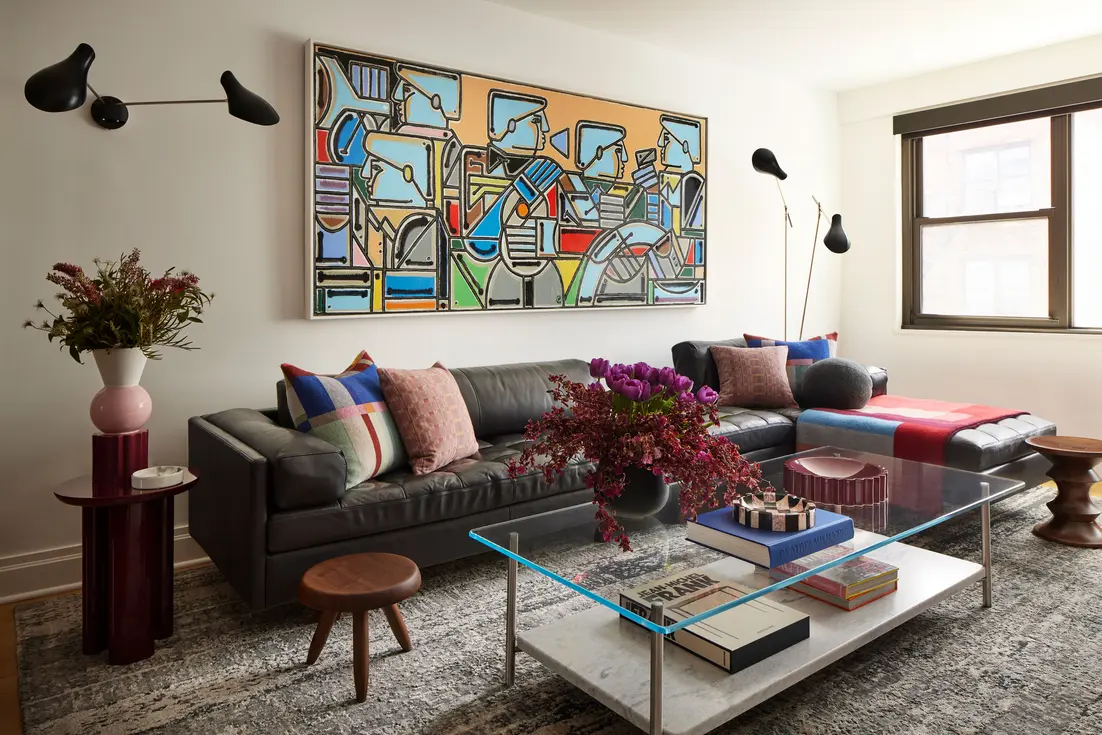
Vary the height of your light sources. For example, an uplight near the floor, a table lamp at seated eye level, and a taller floor lamp create a more natural distribution than three lamps with identical shades at identical heights. Avoid placing every lamp along one wall; the opposite side of the room will still feel dim.
A modest accent light can also highlight a bookcase, artwork, plant, or textured wall. Accent light is optional, but it can make a practical lamp arrangement feel deliberate rather than temporary.
A practical lamp layout for most living rooms
Use this as a starting point, then adjust it to the shape of your room and the way you use it:
- Put an uplight in the darkest corner or near the center of the room's longest wall.
- Add a reading lamp beside the chair or end of the sofa used most often.
- Place a table lamp or second floor lamp across the room from the uplight.
- Switch on all three lights and stand at the room entrance, the sofa, and the main reading seat.
- Move lamps before buying more. A lamp that is useful in one corner may be ineffective when blocked by a tall chair, open shelving, or heavy drapery.
The goal is not uniform brightness on every surface. A good living room has enough light for safe movement and everyday activity, with slightly brighter areas at seating and tables. It should not feel like a waiting room lit by a single hard source.
Estimate how much lamp output you need
There is no reliable universal lumen total for every living room. Ceiling height, wall color, window light, furniture, shades, and the direction of each lamp all change the result. Indirect lighting also produces a softer effect than the same labeled output from a bare bulb pointed into the room.
A better method is to treat bulb output as a starting point and assess the room at night:
- Begin with the uplight and note whether the ceiling and upper walls are visibly illuminated.
- Add the reading lamp and check whether the main seat is comfortable for its intended task.
- Add the local lamp and look for remaining dark corners, especially paths through the room.
- If the room is still dim, add another source in the dark zone before fitting a much brighter bulb into one existing lamp.
Check the lamp's maximum permitted bulb rating before changing a replaceable bulb. For an integrated LED fixture, use its stated output and dimming compatibility as the guide. Do not exceed the fixture's listed limit, and do not use a bulb shape that contacts the shade or diffuser.
Choose color temperature and color quality deliberately
For a living room, warm white light usually makes lamps feel cohesive and relaxed. Lamps in the same room should generally use matching or closely related color temperatures. Mixing distinctly warm and cool bulbs can make one corner look yellow while another looks stark or bluish.
Many people prefer warm white around 2700K to 3000K in a living room. The better choice depends on the room's finishes, daylight, and the atmosphere you want in the evening. For more context on why lamps can appear different in photographs and in person, see why 3000K lighting looks different in photos.
Color rendering also matters when you want upholstery, art, wood, and paint to look believable. A lamp with better color rendering will generally make colors appear more natural than a poor-quality source of the same brightness. See what CRI means in lighting for a plain-language explanation.
Control glare before adding more brightness
Glare is the main reason a lamp-filled room can still feel unpleasant. Look for these common problems:
- A bare bulb is visible from the sofa.
- A clear glass shade exposes a bright LED filament at eye level.
- A reading light reflects in the television screen.
- A floor lamp sits directly behind a seated person's head.
- An uplight shines into a glossy ceiling, mirror, framed glass, or television.
Use opaque or diffusing shades where you sit facing the lamp. Move reading lights to the side rather than directly in front of seating. If television viewing is important, use lamps behind or beside the viewing position and dim the ambient lighting rather than leaving a bright source in the screen's reflection.
Dimmers are especially useful for an uplight because the amount of ambient light needed for conversation differs from what is needed for cleaning, games, or reading. Confirm that both the lamp and bulb are designed for dimming before relying on that feature.
Renter-friendly living room lighting options
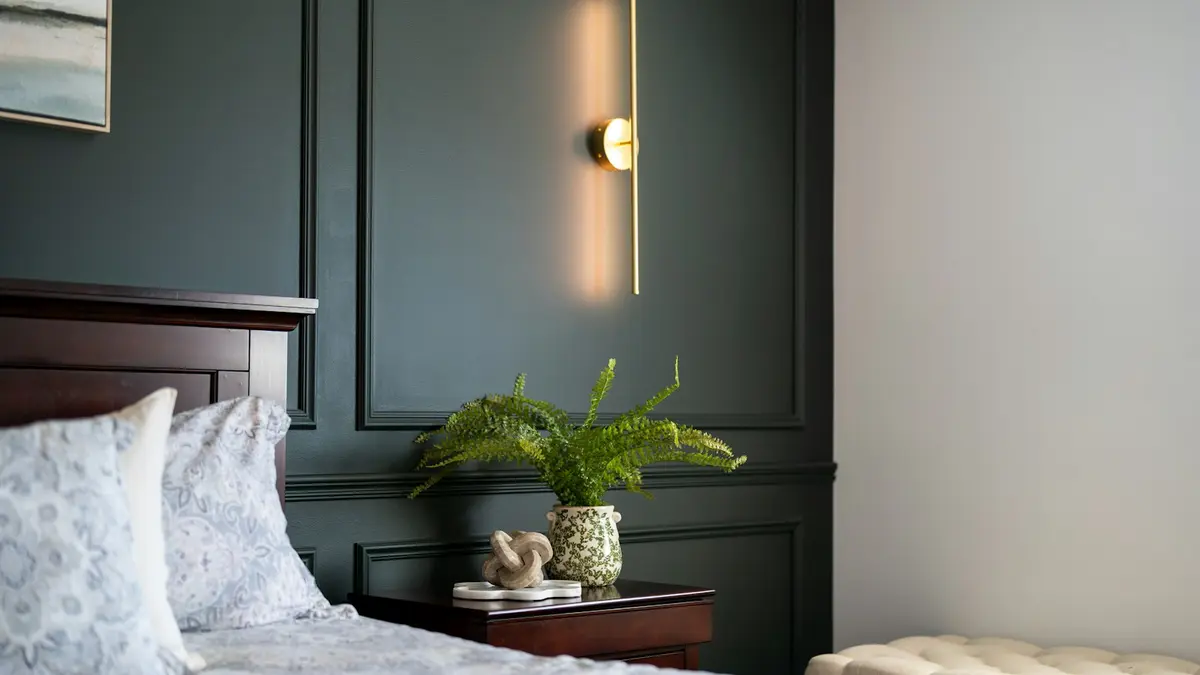
Lamps are the simplest renter-friendly living room lighting solution because they need no permanent alteration. Plug-in wall sconces can add useful light beside seating or along a feature wall, provided their cords can be routed without creating a trip hazard. Cord covers may make a visible run less intrusive, but they should not be used to hide damaged cords.
A plug-in pendant can provide a visual center over a seating area, but it should not be expected to light the whole room by itself. It works best as one part of the layered plan, with floor and table lamps still handling ambient and task light.
If you are considering a hardwired fixture, new ceiling outlet, or concealed wiring, consult a qualified electrician and verify current local requirements. This is particularly important in rental homes, where permission from the property owner may also be required.
Avoid relying on one bright ceiling-fan light
A ceiling fan light, if the room has one, can be helpful for occasional full-room brightness. It is rarely the best only source for a living room. A central downward light can create shadows under brows and furniture, leave corners dim, and make the room feel flat at night.
Use it as an optional general layer, then keep lamps near seating and at the perimeter. If the fan light has a dimmer, lowering it while leaving one or two lamps on often creates a more comfortable balance.
Final check: test the room at night
After arranging the lamps, test the room after dark rather than judging it in daytime window light. Walk from the entry to the seating area. Sit in each regular seat. Read for a few minutes. Turn on the television. Notice whether you can see the bulbs themselves or whether any route through the room remains poorly lit.
If one area is still dark, solve that local problem with a lamp near it. A living room without a ceiling fixture works best when light comes from several calm, well-placed sources rather than one attempt to illuminate everything.
References
- Living Room Lighting Ideas Without Overhead Light. (n.d.). https://www.letifly.com/blogs/letifly-ideas/living-room-lighting-ideas-with-no-overhead-light
- Uplighting Ideas for Living Room. (n.d.). https://www.pinterest.at/ideas/uplighting-ideas-for-living-room/945637867152
- Installing living room lighting with NO light source in the ceiling?. (n.d.). https://www.reddit.com/r/HomeImprovement/comments/916tqi/installing_living_room_lighting_with_no_light
- Layered lighting ideas for living rooms without recessed .... (n.d.). https://www.facebook.com/groups/homedesign/posts/2184555598933948
- Living Room With No Overhead Lighting? A Designer’s Guide | Ask Joshua — JJones Design Co.. (n.d.). https://www.jjonesdesignco.com/blogs/ask-joshua-what-to-do-if-your-living-room-has-no-overhead-lighting
- How To Light A Living Room With No Overhead Lighting?. (n.d.). https://www.edwardmartin.com/blogs/information/how-to-light-a-living-room-with-no-overhead-lighting
- How to Light a Room with No Overhead Lighting. (n.d.). https://citylightssf.com/blogs/city-lights-insights/how-to-light-a-room-with-no-overhead-lighting
- What are some options for installing lighting in a living room with no .... (n.d.). https://www.facebook.com/groups/homedesign/posts/1541826543206860