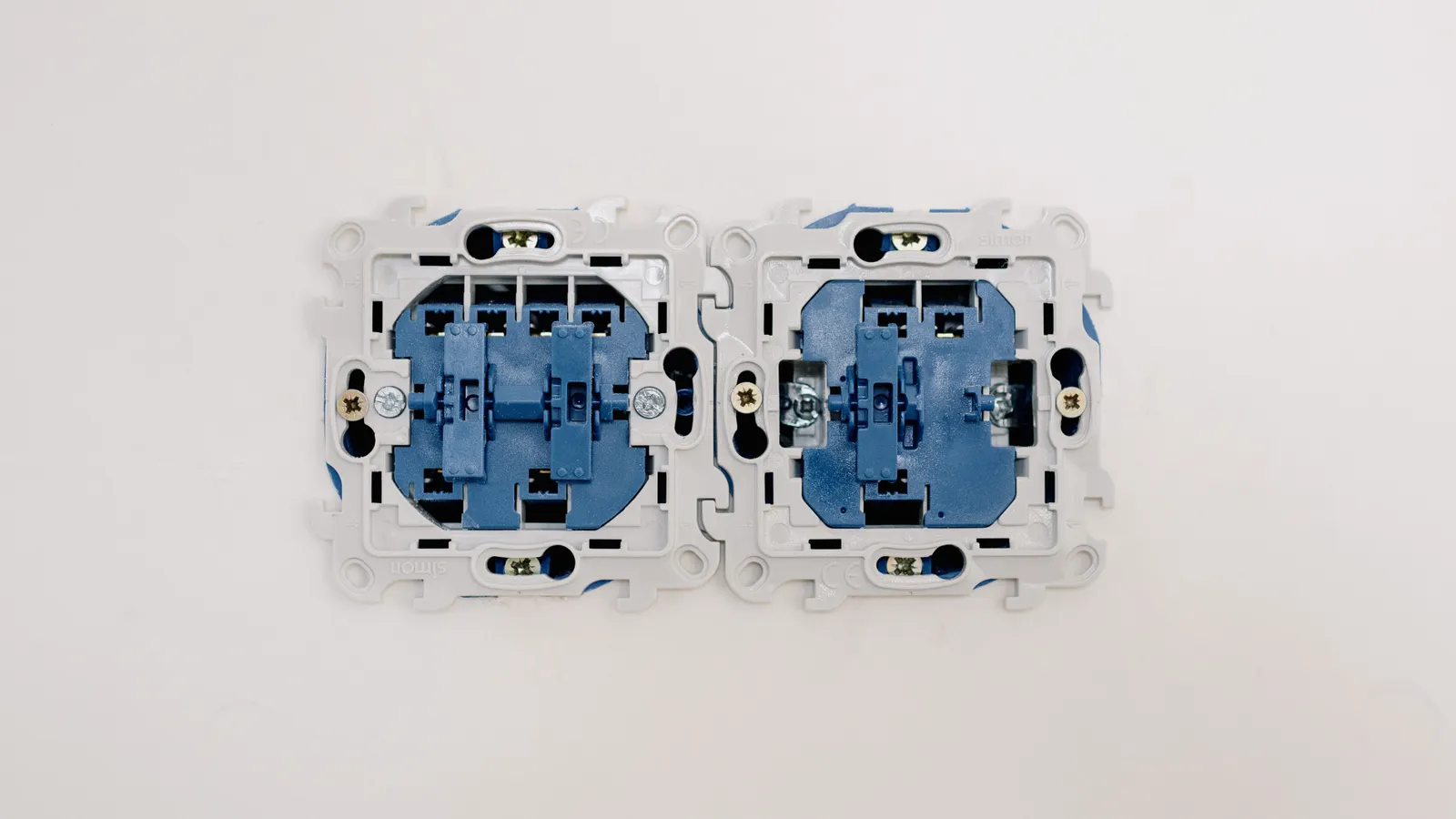
A light switch next to a shower is not made automatically safe simply by replacing the switch or fitting a weatherproof cover. A cover can help protect electrical parts from incidental moisture in an appropriate installation, but it cannot override local electrical rules, correct a damaged box or wiring method, or make a switch acceptable where it is exposed to shower spray or located in a prohibited area.
If the switch is directly beside an open shower, inside the shower enclosure, reachable while showering, visibly damp, or exposed to routine spray, treat it as a prompt for a licensed electrician to assess the installation. Moving the bathroom light switch outside the room, or to a dry wall location inside it, is often the clearest long-term solution.
Why location matters more than the switch cover
Bathrooms are not one uniform electrical environment. A switch near a vanity may only encounter humidity and occasional splashes. A switch beside an open shower, however, can be subjected to direct spray, wet hands, cleaning water, failed shower curtains, or water escaping around a door.
Electrical rules distinguish between conditions such as dry, damp, and wet locations, but the definitions and permitted equipment depend on the electrical code adopted where you live. The exact boundaries around a tub or shower, and the rules for switches within them, can vary by jurisdiction and by the code edition in force.
That is why a visual judgment alone is not enough. “It has never been splashed” is not the same as showing that the equipment is suitable and properly installed for the location.
A qualified electrician or local electrical inspector can determine whether the existing switch is:
- outside the shower or tub space under current local rules;
- likely to receive direct spray or regular splashing;
- installed in a suitable electrical box and wiring system;
- properly grounded and connected;
- affected by a remodel or repair that triggers upgrades; and
- suitable to remain where it is.
What a weatherproof switch cover can do
A weatherproof switch cover is part of an enclosure system designed to limit moisture entry around a switch and electrical box. Depending on the product and installation, it may include a gasketed cover, a protective flap, or a cover intended for a particular type of box.
Used in the right place, a listed cover can be useful protection. For example, it may be appropriate where a switch is in a damp environment but is otherwise allowed there and paired with the correct box, cover, and installation method.
A cover may help with:
- humidity and occasional condensation;
- accidental splashes outside the main shower-spray area;
- protecting the opening around a properly installed switch; and
- maintaining the intended protection of a suitable surface-mounted enclosure.
The important point is that the rating applies to the assembled installation, not just to a plastic lid bought separately. A weatherproof cover installed on an unsuitable box, an incorrectly mounted device, or deteriorated wiring is not a complete safety solution.
What a cover cannot solve
A weatherproof switch cover does not make every location acceptable. It cannot reliably solve these problems:
A switch inside the shower area
A switch located within a shower enclosure or in a place that receives direct shower spray may be unacceptable regardless of whether a cover is fitted. Rules in many areas place strict limits on ordinary switches in tub and shower spaces. Verify the current rule with the authority having jurisdiction or a licensed electrician rather than assuming a cover changes the answer.
A switch that can be operated from the shower
If a person can stand in the shower and easily operate the switch, the arrangement deserves particular scrutiny. Even where the exact local boundary is unclear to a homeowner, this is not a situation to address with a cosmetic cover alone.
Damaged or obsolete electrical parts
Cracked devices, loose cover plates, rust, discoloration, missing grounding, a loose electrical box, or brittle insulation need repair. Moisture protection does not correct internal defects.
Water entering behind the wall
Water can reach electrical boxes through failed tile grout, cracked caulk, leaking plumbing, an unsealed shower surround, or wall damage. A cover on the room side will not stop water entering from behind.
A noncompliant renovation layout
If a bathroom is being remodeled, local permit and inspection requirements may apply. An existing switch that has remained in place for years may need to be addressed when work changes the room, shower enclosure, wiring, or wall finishes.
Should you move the bathroom light switch outside?
Moving a bathroom light switch outside the bathroom is a common solution when the existing switch is too close to the shower. It removes the control from the wet-room environment and can avoid trying to protect an unsuitable location.
The tradeoff is convenience. Some people dislike entering a dark bathroom to find the switch in the hall. That can usually be improved with planning rather than keeping an unsafe switch location.
Practical options include:
- placing the switch just outside the bathroom door on the latch side;
- relocating it to a dry wall inside the bathroom, away from the shower and likely splash paths;
- using a second properly designed control location, where permitted and correctly wired;
- adding an occupancy or vacancy sensor as part of a professionally planned lighting-control arrangement; or
- improving daylight, night lighting, or a low-level guide light so the room is easier to enter safely.
A switch outside the room should still be placed and wired according to local requirements. Do not assume that moving it through the wall is a simple do-it-yourself task; the existing cable route, box location, grounding, circuit layout, and wall construction all affect the work.
For broader bathroom fixture planning, see our guide to recessed light placement in a shower. Shower lighting and switch placement are separate issues, but both depend on understanding water exposure.
A sensible inspection checklist
Before deciding between a cover and relocation, document the situation for an electrician. Photos can help, but do not remove a cover plate or open the electrical box yourself unless you are qualified and the circuit has been safely isolated.
Note the following:
- The shower type. Is it a tub-shower, enclosed shower, open wet-room shower, or shower with a curtain?
- The switch position. Is it on the same wall as the shower, immediately outside the enclosure, or across the room?
- Likely water exposure. Does the switch receive spray, splashes, steam, or water from cleaning?
- Reachability. Could someone touch the switch while standing in the shower or bathtub?
- Visible condition. Look for cracked plates, staining, corrosion, loose parts, or evidence of water damage.
- Recent or planned work. Mention any shower replacement, tile work, plumbing leak, electrical upgrade, or permit-based remodel.
This information helps the electrician evaluate the actual location rather than answering only a general question about switch covers.
Do not confuse GFCI protection with location protection
Ground-fault protection can reduce the risk of certain electric-shock events by disconnecting power when it detects an imbalance. It is an important safety measure in many bathroom electrical applications.
But GFCI protection does not make an improperly located switch acceptable, does not prevent water from reaching electrical parts, and does not repair defective wiring. It is one layer of protection, not a substitute for suitable equipment location, correct installation, and a sound enclosure.
Likewise, a switch marketed for outdoor or wet-location use may be part of a listed system, but that does not establish that it is permitted beside your shower. Product labeling, installation instructions, the box and cover arrangement, and local rules all matter.
When to call an electrician promptly
Arrange professional assessment without delay if you notice any of the following:
- the switch is inside the shower enclosure or receives direct spray;
- water has entered the switch, box, wall, or ceiling nearby;
- the switch sparks, buzzes, feels warm, works intermittently, or trips a breaker;
- there is corrosion, scorching, a burning smell, or discoloration;
- the wall around the switch is soft, stained, or repeatedly damp;
- you are replacing a shower, opening walls, or undertaking a bathroom remodel; or
- you cannot tell whether the switch is outside the locally regulated shower area.
Turn off power at the appropriate breaker if there is an active sign of damage or water intrusion, avoid touching wet electrical equipment, and seek urgent professional help.
The practical answer
A weatherproof switch cover may be part of a safe installation in a suitable damp location, but it is not a universal fix for a light switch next to a shower. If the switch is exposed to spray, located within the shower space, reachable from the shower, or paired with questionable wiring or water damage, relocation or rewiring is more likely to be the right path.
For an older bathroom, the most useful next step is an on-site assessment by a licensed electrician familiar with current local requirements. They can determine whether the switch can remain with a correctly matched enclosure, whether it should move to a dry interior wall, or whether moving the bathroom light switch outside is the safest and most practical option.
References
- Bathroom Lighting Requirements: Codes, Safety & Design. (n.d.). https://ajlongelectric.com/blog/bathroom-electrical-code-compliance-nova.html
- Light switch in a wet location. How do I fix this? : r/AskElectricians. (n.d.). https://www.reddit.com/r/AskElectricians/comments/151lf4f/light_switch_in_a_wet_location_how_do_i_fix_this
- Bathroom Electrical Code in California 2026: GFCI, Circuits & Lighting Requirements. (n.d.). https://www.oakwoodremodel.com/blog/bathroom-electrical-code-california-2026
- Light Switch Near Shower - Electrical Inspections - InterNACHI®️ Forum. (n.d.). https://forum.nachi.org/t/light-switch-near-shower/39428
- Sigma Engineered Solutions Rectangle Plastic 1 Gang Toggle Switch Cover For Wet Locations | Pro Builders Material. (n.d.). https://probuildersmaterial.com/p/sigma-electric-rectangle-plastic-gang-toggle-switch-cover-031857142100
- electrical - How do you weatherproof a light switch? - Home Improvement Stack Exchange. (n.d.). https://diy.stackexchange.com/questions/28631/how-do-you-weatherproof-a-light-switch?lastactivity=
- electrical - How do you weatherproof a light switch? - Home Improvement Stack Exchange. (n.d.). https://diy.stackexchange.com/questions/28631/how-do-you-weatherproof-a-light-switch?answertab=scoredesc
- electrical - How do you weatherproof a light switch? - Home Improvement Stack Exchange. (n.d.). https://diy.stackexchange.com/questions/28631/how-do-you-weatherproof-a-light-switch?noredirect=1