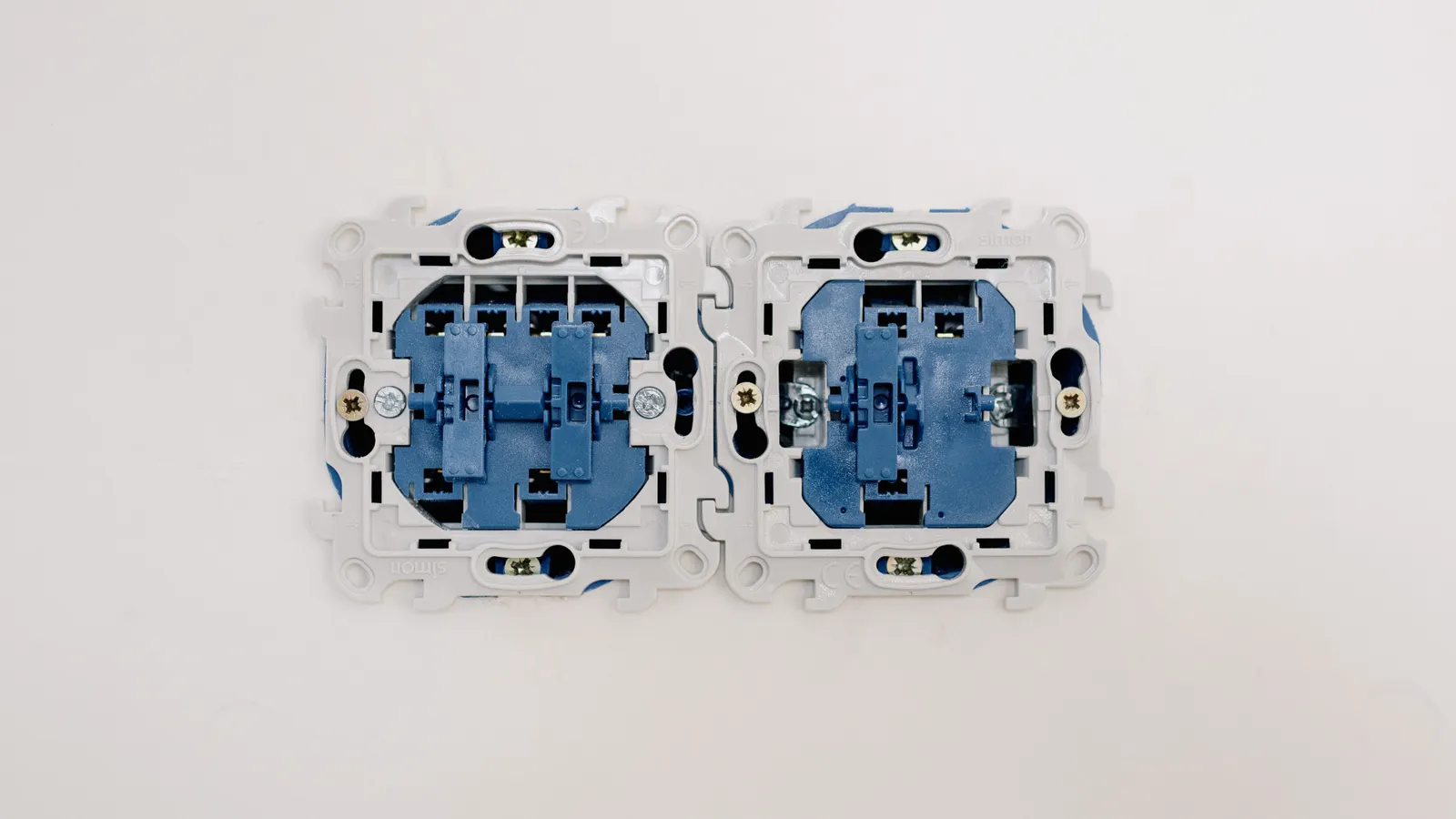
A basic mechanical light switch can work perfectly without a neutral wire in its box. It simply opens or closes the hot conductor going to the light. Many modern controls are different: dimmers, occupancy sensors, timers, connected switches, and some smart switches contain electronics that need a small amount of power even while the light is off. A neutral provides the normal return path that lets those electronics remain powered.
That is the practical answer to why do light switches need a neutral wire. The newer wiring expectation is not based on a belief that every ordinary toggle switch uses a neutral. It is intended to make switch locations ready for controls that do. Whether a neutral is required in a particular installation, and whether an older installation must be changed, depends on the locally adopted electrical rules, the scope of the work, and the wiring method. A qualified electrician or local inspector can interpret those details for a specific project.
What a neutral wire does at a switch
In a typical grounded household branch circuit, the hot conductor delivers electrical energy to a load and the neutral is the grounded conductor that normally carries current back to the source. The equipment grounding conductor has a different safety role: it helps provide a fault-current path and is not a substitute for a neutral.
A conventional single-pole switch does not need to consume power. It only interrupts the hot conductor. The neutral can remain at the ceiling box or fixture, connected directly to the lamp.
An electronic switch has a small circuit board that may need power for functions such as:
- wireless communication and app control;
- status lights or display indicators;
- occupancy or vacancy sensing;
- schedules, timers, and scene settings;
- dimming electronics; and
- retaining readiness while the controlled light is off.
With both line power and neutral available in the switch box, the device can power its electronics independently of the lamp. This is generally more reliable and allows the device to work with a wider range of LED fixtures and bulbs.
Why an old switch loop often has no neutral in the box
Older homes commonly use a wiring arrangement called a switch loop. In its traditional form, power reaches the light fixture first. A cable then runs down to the wall switch, carrying a hot feed to the switch and a switched-hot conductor back to the fixture.
The fixture box has the neutral because that is where the light load connects. The switch box may contain only conductors needed to send hot power down and switched power back. A simple switch works normally in this arrangement, but there is no neutral available for an electronic control.
This is why removing a switch plate and finding two insulated conductors does not necessarily mean anything is broken. It may simply reflect an older, once-standard wiring approach. Wire color alone is not a dependable way to identify function, especially in older work or altered installations. Electrical conductors should be identified and tested by someone qualified to do so, with the circuit safely de-energized when work is performed.
Why modern wiring brings a neutral to many switch locations
Modern lighting controls increasingly need continuous low-power electricity. If the neutral is already in the switch box, a future owner can often replace a basic switch with a compatible electronic control without opening walls or running a new cable.
This is the main benefit of the neutral-at-switch concept: flexibility. It supports future changes such as adding an occupancy sensor in a hallway, a timer in a laundry area, or a smart dimmer in a living space.
The National Electrical Code has included provisions addressing grounded conductors at many lighting switch locations in NEC 404.2(C). The rule has conditions and exceptions, and local jurisdictions do not all adopt the same NEC edition at the same time. The International Residential Code also includes related language for applicable residential work. These provisions should not be read as a universal instruction that every switch box in every existing home must immediately be rewired.
A neutral requirement is not the same as a smart-switch requirement
It is useful to separate two questions that are often treated as one.
| Question | What it means |
|---|---|
| Is a neutral expected at this switch location? | This is a wiring and code-compliance question shaped by the location, age of the work, local code adoption, and project scope. |
| Does this specific smart switch need a neutral? | This is a product compatibility question answered by the device instructions and the existing circuit arrangement. |
Some smart switches are designed to operate without a neutral. Rather than using a dedicated neutral in the box, they may draw a very small current through the lighting load. That approach can be useful in older homes, but it is not automatically compatible with every LED bulb, integrated LED fixture, fan-light combination, or multi-location switching arrangement.
Potential symptoms of a poor match include faint glowing when off, flickering, failure to turn fully off, a device that will not stay powered, or a minimum-load issue. A no-neutral smart switch can be a valid option when it is listed and installed according to its instructions, but it does not create a neutral where one is absent.
Do not connect an electronic switch's neutral terminal to a bare or green grounding conductor. Ground and neutral have separate functions, and using grounding conductors as normal current-carrying neutral conductors can create safety and compliance problems.
When a neutral may not be needed at every location
The commonly repeated statement that 鈥渁ll switches need a neutral鈥?is too broad. NEC provisions addressing switch locations include exceptions and specific conditions. For example, the available pathway for future conductors, automatic lighting controls, receptacle switching, and the arrangement of multi-location controls can affect whether a grounded conductor is expected at a particular box.
There can also be a difference between new construction, substantial remodeling, a newly added circuit, and replacing one failed switch in an otherwise untouched older home. Existing installations are often assessed differently from newly installed work, but that does not mean any older wiring arrangement is acceptable for every new device or renovation.
If an inspection has raised the issue, ask for the cited code section, the adopted code edition, and whether the correction applies to the specific alteration being permitted. That turns a vague instruction to 鈥渁dd neutrals鈥?into a question an electrician can price and plan accurately.
What to do when your switch box has no neutral
Start by identifying the goal. The best next step differs if you are correcting permitted renovation work, replacing a failed switch, adding smart control, or planning a larger update.
For a renovation or failed inspection
An electrician may need to run new cable, revise the circuit routing, or use an accessible raceway where permitted. The practical difficulty depends on where the circuit originates, how the walls and ceilings are built, and whether finishes must be opened. This is not a safe do-it-yourself modification for most homeowners because the work may involve circuit identification, box-fill considerations, conductor sizing, grounding, splices, and local permit requirements.
For a smart-switch upgrade in an older home
Check the exact device documentation before buying or installing anything. Confirm whether the device requires a neutral, whether it supports your lamp type, and whether it works with the existing multi-way arrangement. If there is no neutral, options may include a compatible no-neutral control, a smart bulb system that leaves the wall switch powered, or installation of new wiring by an electrician.
A smart bulb can avoid the neutral-at-switch issue, but it changes how the wall control is used. If someone turns off power at the wall switch, the bulb loses its connected features. Plan the control system around how people in the household will actually use the room.
For a basic replacement switch
If you are replacing a like-for-like mechanical switch and no new electronic feature is involved, the absence of a neutral does not by itself prove that the existing switch cannot work. Still, damaged insulation, aluminum wiring, unusual conductor colors, loose connections, heat damage, or uncertainty about what is in the box are reasons to stop and call an electrician.
The practical takeaway
A neutral at a light switch location is primarily about making room for modern electronic controls. Old switch-loop wiring can operate a basic switch safely when it is intact and correctly installed, but it may leave no normal return path for a smart switch, sensor, timer, or electronic dimmer.
For new work and renovations, current local rules may expect a neutral at applicable lighting switch locations, subject to exceptions and local adoption. For existing homes, the right answer depends on the work being done and the control you want to install. Treat code compliance and product compatibility as related but separate questions, and have a licensed electrician assess any upgrade that requires new conductors, changes to circuit wiring, or correction of an inspection issue.
References
- Do We Need a Grounded Conductor at that Switch Location or Not? 鈥?IAEI Magazine. (n.d.). https://iaeimagazine.org/2018/january2018/do-we-need-a-grounded-conductor-at-that-switch-location-or-not
- Neutral at Switch Locations [404.2(C), 2020 NEC]. (n.d.). https://www.youtube.com/watch?v=iADvGg9Ss7M
- 404.2(C) Switches Controlling Lighting Loads.. (n.d.). https://www.electricallicenserenewal.com/Electrical-Continuing-Education-Courses/NEC-Content.php?sectionID=75
- 2018 International Residential Code (IRC) - E4001.15 Switches controlling lighting loads.. (n.d.). https://codes.iccsafe.org/s/IRC2018P4/chapter-40-devices-and-luminaires/IRC2018P4-Ch40-SecE4001.15
- 404.2(C) Switches Controlling Lighting Loads.. (n.d.). https://www.electricallicenserenewal.com/Electrical-Continuing-Education-Courses/NEC-Content.php?sectionID=301.0
- Switch Connections | Captain Code 2017 Web Portal. (n.d.). https://captaincode2017.leviton.com/node/136
- 404.2(C) (Neutral at Switch Require) Exeption - 5 device limit... | Mike Holt's Forum. (n.d.). https://forums.mikeholt.com/threads/404-2-c-neutral-at-switch-require-exeption-5-device-limit.2564285
- WORKING DRAFT OF NEC CODE-MAKING PANEL 9 MEETING OUTPUT. (n.d.). https://docinfofiles.nfpa.org/files/AboutTheCodes/70/70_A2025_NEC_P09_FD_PrelimFR.pdf