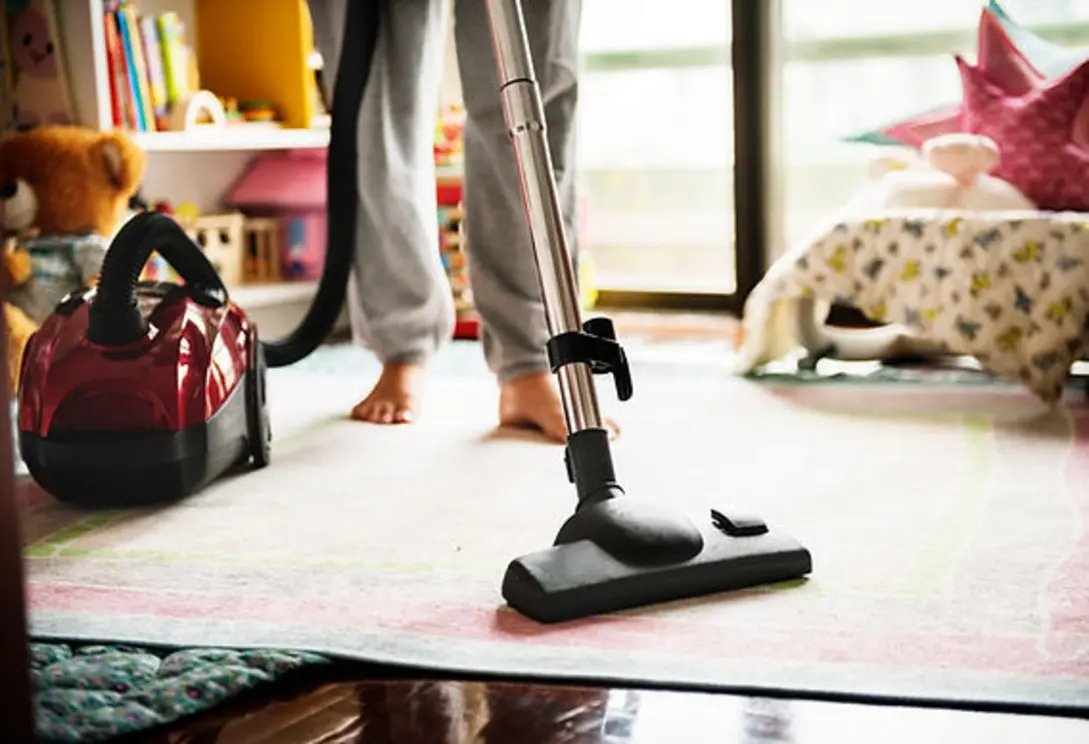
LED lights flicker when a vacuum turns on because the vacuum motor draws a relatively large burst of power as it starts. That temporary demand can cause a small voltage drop, and LEDs often make the change more visible than older incandescent bulbs did. A single, brief dim or blink in lights near the vacuum's circuit can be a normal response to motor startup.
Repeated flickering, a pronounced brightness change, lights flickering while the vacuum continues to run, or whole-house LED flickering intermittently is different. Those patterns can indicate an overloaded or poorly performing circuit, a failing vacuum, a loose electrical connection, or a problem farther upstream in the electrical system. Do not dismiss widespread or worsening flicker as an LED-bulb problem.
Start by identifying the flicker pattern
The useful question is not only whether lights flicker when an appliance starts, but which lights react, when they react, and whether the reaction stops immediately.
| What you observe | More likely explanation | Sensible next step |
|---|---|---|
| One quick, mild dim when the vacuum starts | Normal motor startup load, especially on a nearby circuit | Monitor it; avoid adding several high-draw devices to the same circuit at once |
| Flicker continues while vacuuming | Vacuum motor, cord, outlet, circuit connection, or supply instability | Stop using the vacuum if symptoms are severe; test only with safe, external checks |
| Only one lamp or fixture flickers | Bulb, LED driver, dimmer compatibility, lamp socket, switch, or fixture connection | Try a known-good LED bulb and test the fixture without a dimmer setting change |
| Several rooms flicker when the vacuum starts | Shared circuit load or an issue at the panel, service, or another common connection | Arrange electrical assessment if it repeats |
| Lights brighten as well as dim, or fluctuate unpredictably | Potential connection or supply problem | Contact a qualified electrician promptly |
A vacuum contains a motor. At startup, a motor needs extra current to begin turning; once it reaches speed, its demand normally settles. That startup demand can briefly reduce the voltage available to lights on the same branch circuit and, in some homes, make lights elsewhere react too.
LED lamps and fixtures use electronic drivers. These drivers can respond quickly to changes in incoming power, so a modest voltage disturbance may look like a visible flicker. This does not mean LEDs cause the electrical problem. They can simply reveal one that incandescent lamps masked with their slower-moving filaments.
A brief dim is not the same as ongoing flicker
A brief, one-time dim when a vacuum starts is generally less concerning than an ongoing problem. The latter deserves investigation because the vacuum should not repeatedly destabilize lighting under ordinary use.
Pay particular attention to these symptoms:
- The lights pulse, flash, or continue to flicker for as long as the vacuum runs.
- Multiple lights in separate rooms react strongly.
- Flicker happens with several appliances, such as a refrigerator, air conditioner, washer, dryer, or microwave.
- The issue is new, becoming more noticeable, or occurs without an appliance starting.
- A switch, plug, outlet cover, power strip, or vacuum cord feels unusually warm.
- You notice buzzing, crackling, a burning smell, discoloration, sparks, or breakers that trip.
The last group of symptoms is not a bulb-selection issue. Stop using the affected appliance or outlet if you can do so safely, and contact a qualified electrician. If there is smoke, arcing, or an active burning smell, treat it as an urgent electrical hazard and seek emergency assistance as appropriate for your area.
Safe checks you can make without opening anything
Do not remove outlet covers, open a service panel, handle exposed wiring, or attempt to tighten electrical connections yourself. The following observations can still help narrow down the cause.
1. Check whether the vacuum and flickering lights share a circuit
With the vacuum unplugged, note which lights are affected. Then plug the vacuum into a different outlet in another area of the home and repeat the observation. Do not use extension cords as a permanent solution, and do not overload power strips.
If the flicker only happens when the vacuum uses one particular outlet or area, the issue may be local to that circuit, outlet, or its connections. If lights across the home still flicker regardless of where the vacuum is plugged in, the issue may be broader.
You may be able to identify circuits from labels at your electrical panel without removing its cover. Treat labels as clues rather than proof; panel directories are often incomplete or outdated. A qualified electrician can identify and test circuits safely if the pattern is unclear.
2. Try a different high-draw appliance only if conditions are normal
If there are no warning signs such as heat, odor, crackling, or tripped breakers, observe whether another motor-driven appliance causes the same brief dim. A fan, blender, or other ordinary appliance may provide a clue, but there is no need to deliberately run multiple large appliances at once.
- If only the vacuum causes the problem, the vacuum or its cord may be contributing.
- If many appliances trigger similar flicker, the home circuit or supply deserves closer attention.
- If the vacuum causes severe flicker in every location, stop using it until it has been inspected or replaced.
Inspect the vacuum externally while unplugged. Look for a damaged cord jacket, a loose plug, signs of overheating, or unusual motor noise during normal use. Do not open the vacuum housing unless you are qualified to service it.
3. Rule out a single LED bulb, fixture, or dimmer issue
When one light flickers but other lights remain steady, start at the light rather than assuming the vacuum is the root cause. Turn power off at the switch, allow the lamp to cool if needed, and make sure a replaceable bulb is fully seated according to the fixture instructions. A known-good bulb can help test whether the problem follows the bulb or stays with the fixture.
Dimmers are another common variable. Some older dimmers do not work reliably with LED bulbs, and an LED bulb may also need to be rated for dimming. A dimmer-related flicker usually appears at particular dim levels, may come with buzzing, or may happen even when no appliance starts.
For more background on control wiring and why electronic lighting devices can behave differently from older equipment, see our guide to why light switches may need a neutral wire.
4. Note whether the lights dim, brighten, or cut out
A small dip in brightness when the vacuum starts fits the usual startup-load explanation. But lights that become brighter, cycle from bright to dim, or briefly lose power in several areas can point to a connection or supply issue that needs professional diagnosis.
Write down what happened before calling an electrician: the affected rooms, the appliance used, whether the vacuum was on a particular outlet, whether the lights dimmed or brightened, and whether the event was momentary or continuous. This can make the inspection more efficient.
Common causes, from simplest to more serious
Normal motor startup load
A vacuum cleaner causes LED lights to flicker most often at the instant its motor starts. If the flicker is mild, brief, and limited to lights on or near the same circuit, startup current may be the entire explanation.
Even then, avoid routinely operating many high-draw appliances on the same circuit. The right circuit arrangement depends on the home, its electrical installation, and applicable local rules, so an electrician should advise if you regularly see loading problems.
A circuit carrying too much load
Lights, outlets, and appliances may share a branch circuit. When a vacuum starts on a circuit already serving portable heaters, kitchen appliances, entertainment equipment, or other significant loads, voltage can dip enough for LEDs to react.
Moving a portable appliance to a different suitable outlet may reduce the symptom, but it is not a substitute for addressing a consistently overloaded circuit. Do not solve the problem by using a larger breaker, altering wiring, or chaining extension cords.
A problem with the vacuum or the outlet it uses
A worn motor, damaged cord, failing plug, or poor outlet contact can create symptoms that are more noticeable than ordinary startup dimming. If the vacuum sounds different, emits an odor, runs inconsistently, or causes flicker to continue, stop using it and have the appliance evaluated.
If the issue follows one outlet rather than the vacuum, avoid that outlet until a qualified electrician has inspected it. Do not repeatedly plug and unplug equipment from an outlet that feels loose, hot, or damaged.
Loose or deteriorating electrical connections
Loose connections can create unstable power, heat, and intermittent flicker. They may be located at a switch, fixture, receptacle, junction point, panel, meter equipment, or utility connection. Their location cannot be determined reliably from flicker alone.
This is one reason house-wide flicker matters. A vacuum may only be the event that exposes a marginal connection; it may not be the underlying fault.
LED-specific compatibility problems
If the flicker is confined to a dimmed fixture, an incompatible dimmer, an unsuitable LED bulb, or a failing LED driver may be involved. Use bulbs and dimmers that their manufacturers identify as compatible, and follow fixture instructions. If a fixture has an integrated LED module rather than a replaceable bulb, its driver may need service or replacement by a qualified person.
Our comparison of integrated LED fixtures and replaceable-bulb fixtures explains why the source of a fault can differ between these designs.
When to call an electrician for flickering lights
Call a qualified electrician soon if the flicker is repeated, affects multiple rooms, occurs with more than one appliance, or has changed noticeably over time. Ask for an assessment of the affected circuits and the broader electrical system rather than only a bulb replacement.
Arrange urgent help if you notice any of the following:
- Burning smell, smoke, sparks, sizzling, or crackling
- Hot outlets, switches, plugs, cords, or panel surfaces
- Lights that brighten unexpectedly or fluctuate throughout the home
- Frequent breaker trips or loss of power
- Visible damage, discoloration, or melted plastic
- Flicker after storm damage, utility work, or another event affecting the electrical supply
If nearby homes are also experiencing flicker or unstable power, the local utility may need to investigate its equipment. Do not approach service equipment or attempt any repair yourself.
The practical takeaway
A slight, isolated LED dim when a vacuum starts can be a normal effect of motor startup load. Persistent flickering is not something to normalize—especially when it is house-wide, worsening, or accompanied by heat, noise, smell, breaker trips, or lights that brighten as well as dim.
Use the safe checks above to identify the pattern, avoid opening electrical equipment, and involve a qualified electrician whenever the symptom suggests more than a brief local response. That approach protects both the lighting system and the electrical system behind it.
References
- Why do my lights continue to flicker when I use the vacuum or turn on the AC? I know it's normal for them to flicker when they turn on, but they don't stop flickering. - Quora. (n.d.). https://www.quora.com/Why-do-my-lights-continue-to-flicker-when-I-use-the-vacuum-or-turn-on-the-AC-I-know-its-normal-for-them-to-flicker-when-they-turn-on-but-they-dont-stop-flickering
- Why LED Lights Flicker After Installation: Electrical Cause. (n.d.). https://www.g4electrical.com/led-lights-flicker-after-installation
- Why Lights Flicker When A/C Turns On: Fix It Fast. (n.d.). https://www.tricountyelectricservice.com/blog/why-lights-flicker-when-ac-turns-on-fix-it-fast
- Flickering Lights in Your Home? Causes & How to Fix Them. (n.d.). https://callamaverick.com/what-causes-flickering-lights-in-your-home
- LED Lights Flickering? What It Means for Your Home's Electrical System. (n.d.). https://www.mirskyelectric.com/led-light-flickering
- Why do some LED bulbs flicker or buzz, and how can this be fixed? - Quora. (n.d.). https://www.quora.com/Why-do-some-LED-bulbs-flicker-or-buzz-and-how-can-this-be-fixed
- Why does an LED light flicker for a few minutes after being turned on? - Quora. (n.d.). https://www.quora.com/Why-does-an-LED-light-flicker-for-a-few-minutes-after-being-turned-on
- Lights Flicker When Dryer Starts | Prairie Electric. (n.d.). https://www.prairielectric.com/electrical-service/lights-flicker-when-dryer-starts