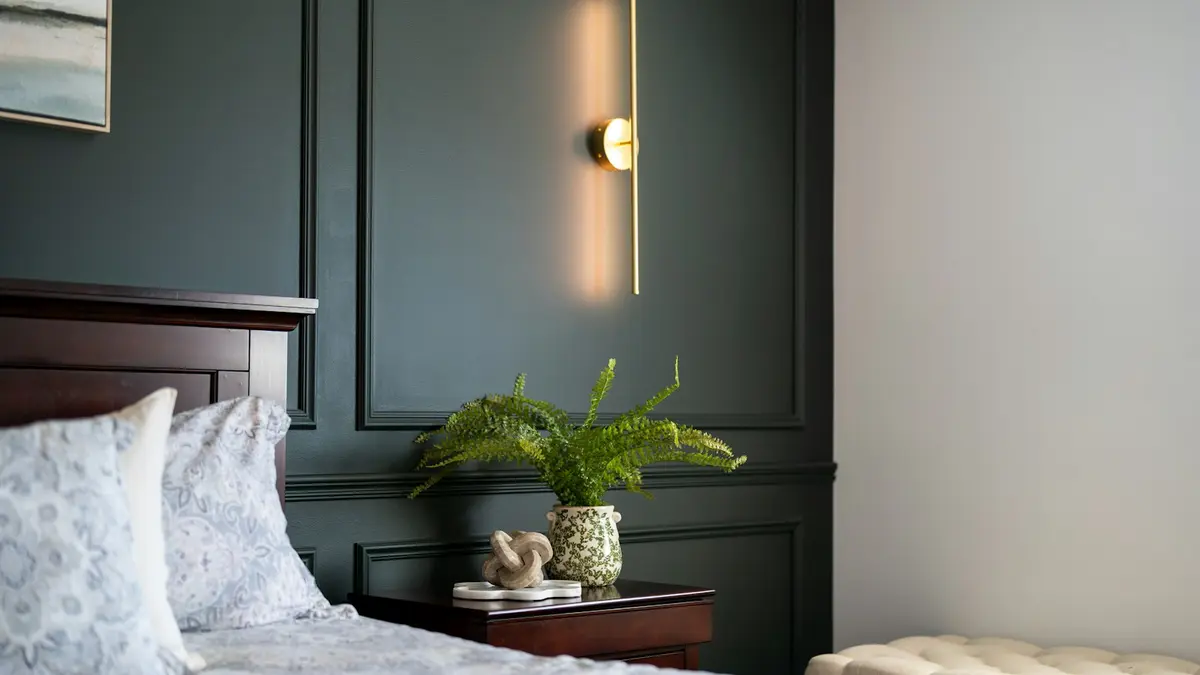
Wafer lights are not the only way to add fixed overhead light to a bedroom, and they are not always the most comfortable choice. In a vaulted-ceiling bedroom, the strongest alternatives are usually regressed recessed downlights, recessed housings with replaceable lamps, or a combination of modest ceiling lighting and indirect or wall-mounted light. These approaches can give you safer, floor-lamp-free circulation without placing a bright, flat LED surface directly in your field of view.
For a bedroom, prioritize glare control and control flexibility before trying to make the ceiling uniformly bright. A vaulted ceiling can put fixtures at unusual angles, and a light that looks fine while standing may become distracting when you are lying in bed. The goal is typically soft room light, enough visibility for walking and dressing, and separate low-level light for bedtime.
Why wafer lights can be uncomfortable in bedrooms
A wafer light is a thin, integrated LED fixture that fits into a shallow ceiling opening. Its shallow profile can be useful where ceiling space is limited. But many wafer-style fixtures place the illuminated lens nearly flush with the finished ceiling. From below, that can create the appearance of a bright disk.
That bright disk is not automatically a problem. In a hallway, closet, or utility area, it may be an acceptable tradeoff for a simple installation. Bedrooms are different because occupants spend time reclining and looking upward. On a sloped ceiling, a flat wafer may also face toward the bed rather than straight down.
Potential concerns include:
- Direct glare: The light-emitting lens is easy to see from common viewing positions.
- Limited beam control: Many wafer fixtures spread light broadly rather than concentrating it where it is needed.
- Integrated components: If the LED module or driver fails, the usual remedy is replacing the fixture rather than simply changing a lamp.
- Variable dimming behavior: Some LED fixtures dim smoothly with compatible controls, while others may shimmer, drop out early, or behave inconsistently with an existing dimmer.
- A ceiling full of bright points: A layout designed only for brightness can make a bedroom feel more like a work area than a place to rest.
Flicker is not inevitable with integrated LED lighting, and it cannot be judged by fixture shape alone. It is more closely related to the quality and design of the LED driver, its dimming compatibility, and the electrical installation. A qualified electrician can help assess an existing dimmer and specify fixtures intended to work with it.
The strongest wafer light alternatives
1. Regressed recessed downlights
A regressed downlight sets the LED source higher inside the ceiling aperture instead of holding the lens nearly flush with the ceiling. The trim and recessed cavity help shield the bright source from view at normal room angles.
For many vaulted ceiling bedroom lighting plans, this is the closest substitute for wafer lights with a meaningful comfort advantage. It retains a clean recessed appearance while offering better visual shielding.
Look for a fixture that is specifically intended for a sloped or vaulted ceiling when it will be installed on a ceiling plane that is not level. A standard fixed downlight installed on a slope may direct its beam across the room instead of toward the floor. Depending on the fixture, a sloped-ceiling-compatible trim, adjustable optical assembly, or directional model may be needed.
Regressed downlights are especially useful for:
- General light near wardrobes and dressers
- Perimeter light that helps you move through the room safely
- Lighting a wall, artwork, or a reading chair with an adjustable version
- A restrained ceiling layout where every fixture has a defined job
Their limitation is ceiling depth. A more deeply recessed fixture may need more space above the ceiling than a very thin wafer light. Before choosing it, have the ceiling cavity, framing direction, insulation conditions, and access constraints evaluated.
2. Recessed housings with replaceable LED lamps
Traditional recessed housings paired with LED lamps remain a practical option when you value serviceability. Instead of treating the light engine as part of the fixture, this approach separates the housing, trim, and lamp. When a lamp fails or you want a different color temperature or beam spread, you can usually replace the lamp without removing the housing.
This can be a good choice if you want more control over the light pattern. A narrower beam can highlight a wardrobe or a wall, while a broader beam can provide softer general illumination. Some trims also position the lamp farther from the room, reducing direct view of the bright source.
The tradeoff is that not every recessed housing, trim, or lamp combination is suited to a sloped ceiling. The housing and trim need to work together, and the lamp must be appropriate for the fixture. Ask the installer to confirm that the selected components are compatible with the ceiling angle and the intended dimmer.
For a broader explanation of maintenance tradeoffs, see our guide to integrated LED vs. replaceable bulb fixtures.
3. Surface-mounted ceiling fixtures with shaded light
A well-chosen surface-mounted fixture can be a better bedroom choice than either wafer lights or recessed lights. Flush and semi-flush fixtures come in forms that conceal the direct view of the lamp, bounce light through glass or fabric, or use a metal shade to direct light down while shielding the source.
On a vaulted ceiling, confirm that the fixture is designed to mount securely and sit properly on a sloped surface. Some fixtures are intended only for flat ceilings, while others have a canopy or mounting system that accommodates an angle.
A surface fixture works particularly well when:
- You want one central ambient source rather than a grid of downlights
- The ceiling cavity is difficult to access
- You prefer a fixture that is easy to service from below
- The room already has strong bedside and closet lighting
Be cautious with exposed bulbs, clear glass globes, and open-bottom fixtures over the bed. Their visual brightness can be as distracting as a flat wafer lens, even when their total light output is modest.
4. Indirect lighting at the ceiling or walls
Indirect lighting sends light toward the ceiling or upper walls first, allowing those surfaces to become the source of soft reflected light. In a vaulted room, this can make the ceiling shape feel intentional while avoiding a row of visible bright apertures.
Options include concealed linear lighting on a high ledge, lighting integrated into a valance, or upward-facing wall fixtures. The details depend on the architecture: a vaulted ceiling with exposed beams, a ridge board, or a simple drywall slope offers different opportunities.
Indirect lighting is rarely the only layer a bedroom needs. It may not provide enough focused light for dressing, closet access, or reading. It works best as calm ambient light combined with directional lighting in the places where tasks happen.
5. Bedside wall lights and fixed reading lights
If floor lamps are being removed because children or pets knock them over, wall-mounted bedside lights solve part of the problem without making the ceiling do every job. A bedside sconce, swing-arm reading light, or wall-mounted shaded fixture can provide low-level light for reading and nighttime movement.
This also lets the overhead layer stay gentler. Rather than brightening the whole vaulted ceiling whenever someone needs a glass of water or wants to read, each lighting layer can be controlled separately.
For ideas focused on the room perimeter, see bedroom corner lighting.
A practical lighting plan for a vaulted bedroom
A good fixed-lighting plan often uses fewer ceiling fixtures than expected. Start by identifying what the room needs after dark:
- Safe entry and circulation: Light the path from the door to the bed, bathroom, closet, or dresser.
- Dressing and storage: Add useful light near wardrobes, drawers, and mirrors rather than relying on light from the center of the room.
- Bedtime use: Provide a separate low-glare bedside layer.
- Comfortable ambient light: Use dimmable ceiling, wall, or indirect light for cleaning, making the bed, and general use.
In a vaulted ceiling room, keep fixed downlights away from positions where the fixture will shine directly into the pillow area. Consider the view from the bed, not just the reflected light on the floor plan. A mockup can help: mark proposed fixture positions with removable tape, then lie on the bed and look toward the ceiling planes where lights would be installed.
Avoid assuming a symmetrical grid is automatically the right answer. Vaulted ceilings often create asymmetry in furniture placement, ridge location, ceiling height, and wall surfaces. A better layout may use a small number of directional fixtures where light is needed, plus wall or indirect lighting for overall softness. Our recessed lighting layout guide explains the planning principles in more detail.
Specifications worth discussing before buying
The label on a fixture does not tell you everything about bedroom comfort. These are useful questions to ask a lighting supplier or electrician.
How deeply is the light source recessed?
A deeper setback generally offers better shielding, though trim shape and beam design also matter. Ask to see the fixture lit from an angle similar to how you will see it from the bed.
Is the fixture designed for a sloped ceiling?
A vaulted ceiling may require a dedicated sloped-ceiling trim or an adjustable fixture. Do not assume that a recessed light that fits physically will direct light appropriately once installed.
What is the beam pattern?
Beam distribution affects where light lands. Broad light may be useful for ambient illumination, while controlled or adjustable light can be more effective at a closet wall or artwork. In bedrooms, a beam that spills into the bed and eyes is usually less useful than one that reaches a task area.
How does it dim with the planned control?
Ask whether the exact fixture and dimmer are intended to work together. If smooth low-level operation matters, it is sensible to verify the combination before installing many fixtures. Dimmer compatibility can influence flicker, audible noise, and how low the light can go before it turns off.
Can the source or driver be serviced?
Some integrated fixtures are designed as sealed assemblies; others have accessible components or longer-term replacement support. Replaceable-lamp recessed fixtures are usually simpler to refresh, but fixture choice should also account for glare, beam control, and the ceiling geometry.
What color of light suits the bedroom?
Many people prefer a warmer appearance for evening bedroom use, while others want a more neutral appearance around closets and mirrors. The important point is consistency: compare samples in the actual room, especially if the bedroom connects visually to a hallway or bathroom. Color rendering also affects how fabrics, paint, and skin tones appear; see what CRI means in lighting.
Common mistakes to avoid
- Choosing the thinnest fixture first, then trying to solve glare later.
- Installing fixed downlights on a slope without checking their aiming direction.
- Putting bright ceiling fixtures directly above or in front of the bed.
- Using one switch for all lighting layers, which forces full-room brightness for simple nighttime tasks.
- Treating an integrated fixture as automatically better or worse than a replaceable-lamp fixture. The right choice depends on serviceability, optics, installation conditions, and the rest of the lighting plan.
- Assuming any existing dimmer will perform well with new LED fixtures.
The most balanced approach
For most bedrooms with a vaulted ceiling, a balanced alternative to wafer lights is a modest number of sloped-ceiling-compatible regressed downlights for circulation and dressing, paired with bedside wall lighting and, where the architecture allows, indirect ambient light. This reduces reliance on portable floor lamps while avoiding the visual effect of many bright, flush ceiling disks.
If ceiling depth or framing rules out regressed fixtures, a shaded surface-mounted fixture combined with wall lights can be just as effective. Have a qualified electrician assess the ceiling construction, existing wiring, switching options, fixture support, insulation conditions, and current local requirements before work begins. The best bedroom lighting plan is not the flattest or most numerous one; it is the one that puts soft, controllable light where the room actually needs it.
References
- Alternatives to can lights in low ceilings? - Facebook. (n.d.). https://www.facebook.com/groups/1572436159678358/posts/3825632601025358
- Our Favorite Recessed Lighting & Some alternatives to can lighting! - Chris Loves Julia. (n.d.). https://chrislovesjulia.com/our-favorite-recessed-lighting-some-alternatives-to-can-lighting
- Recommendations for quality, can-less, recessed lighting that won't .... (n.d.). https://www.reddit.com/r/Lighting/comments/1pefq6x/recommendations_for_quality_canless_recessed
- Wafer Lights vs Can Lights 鈥?Everything You Should Know. (n.d.). https://www.gelighting.com/inform/wafer-lights-vs-can-lights
- Wafer vs Regressed Lighting? : r/kitchenremodel. (n.d.). https://www.reddit.com/r/kitchenremodel/comments/1prga2p/wafer_vs_regressed_lighting
- Vaulted Ceiling Lighting Ideas - Solutions for Sloped & Cathedral .... (n.d.). https://www.lightopia.com/vaulted-ceiling-lighting-ideas
- Recessed Lighting Tips for Your Home Addition - Expert Guide. (n.d.). https://www.justanswer.com/general/tuf5o-recessed-led-lighting-vaulted-ceiling.html
- Planning a space with a vaulted or sloped ceiling? Standard .... (n.d.). https://www.facebook.com/maxxima/posts/planning-a-space-with-a-vaulted-or-sloped-ceilingstandard-recessed-lights-arent-/1411642957660775