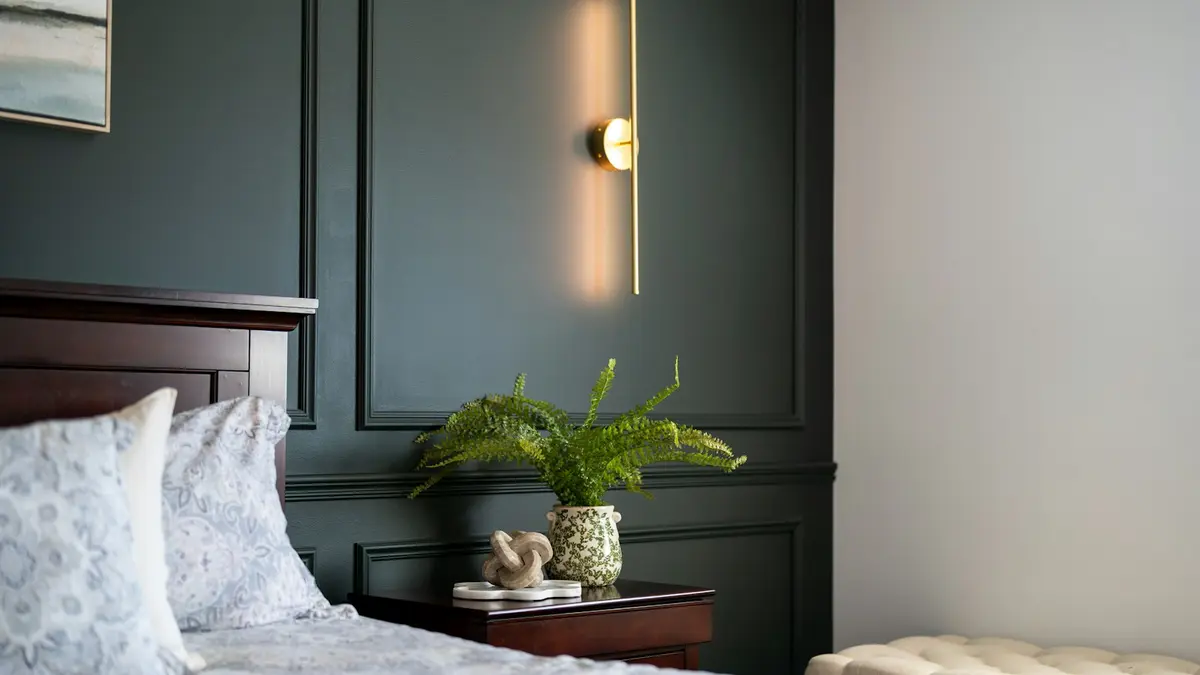
A bedroom corner lighting by a window works best when daylight and electric light have different jobs. Let the window provide changing daytime light, a view, and a sense of depth. Then add controlled evening light that can illuminate a book, the bedside surface, and a safe route around the bed without recreating the intensity of daytime sun.
The key is to plan the corner as a small working zone rather than as a decorative arrangement. Notice where sun enters, whether it strikes the pillow or drawer front, and what happens after sunset. A good result usually combines daylight control, a bedside task light, and a softer layer that keeps the corner from becoming a bright island in an otherwise dark room.
Start with the daylight the room already has
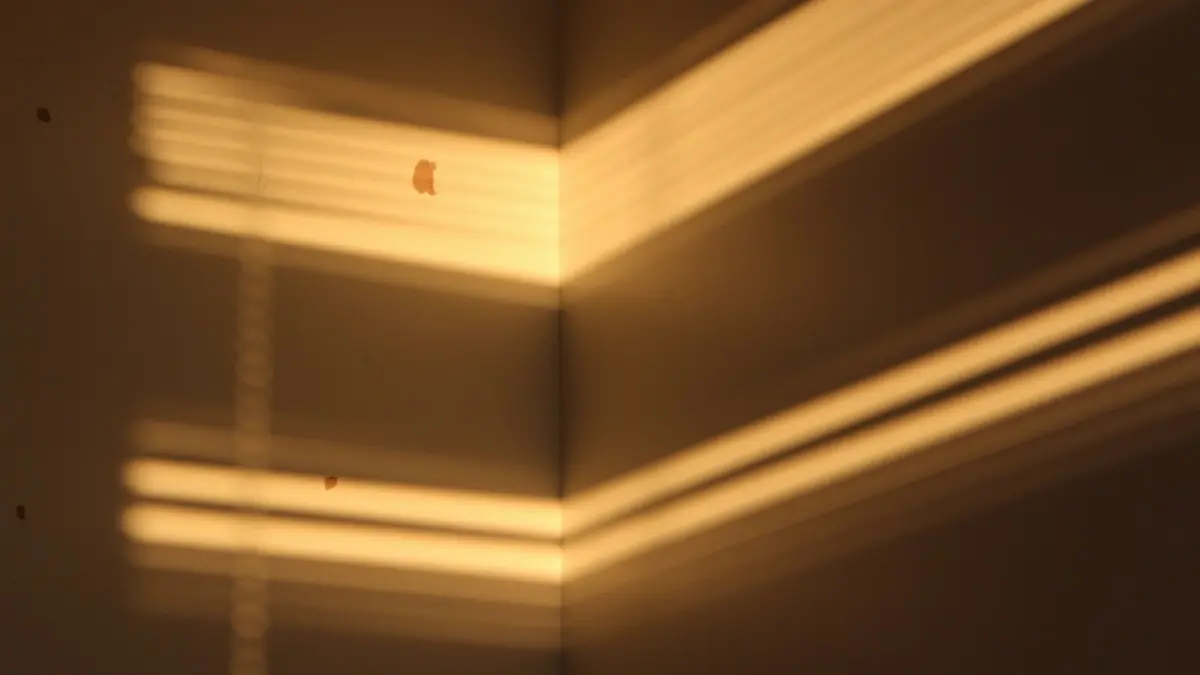
A window can make a bedside drawer, wall, or bedding look unusually considered because daylight has direction. It creates highlights, soft shadows, and gradual changes across the day. Electric lighting can support that feeling, but it should not try to imitate direct sun with one exposed, overly bright lamp.
Watch the corner at a few points during a typical day before moving furniture or choosing a fixture. Pay attention to these questions:
- Does the window bring direct sun or mostly diffuse sky light?
- Is the strongest light in the morning, afternoon, or late day?
- Does sun fall on the pillow, where it may disturb rest, or on the side of the bed?
- Does the bedside table become a useful bright surface, or does glare make it hard to use?
- Does the window create strong reflections in a mirror, glossy frame, screen, or glass-fronted furniture?
East-facing windows tend to deliver their strongest direct light earlier in the day. West-facing windows can bring stronger afternoon and evening sun, which may be attractive but can also cause heat and glare. The exact experience also depends on nearby buildings, trees, overhangs, and the size and height of the window.
Place the bed to use the window without making it a problem
A bed beside a window can feel open and restful, but the window should not force an awkward bedside arrangement. Leave enough practical room for curtains or shades to operate, for the window to open where applicable, and for the bedside table to be reached from bed.
If the bed runs perpendicular to the window, daylight often grazes across the bed and side table. This can create gentle modeling on textured bedding and a wall, especially when the window is to one side rather than directly behind the headboard. If the pillow sits directly under or very close to the window, consider whether morning light, drafts, street lighting, or difficult window access will be an issue.
Avoid blocking most of the window with a tall headboard, large cabinet, or floor lamp unless that loss of daylight is intentional. Lower furniture near the window usually preserves more of the view and keeps the corner from feeling crowded. A narrow table, wall-mounted shelf, or small wall light can be useful where a conventional bedside table would overlap the window trim or curtain path.
Manage direct sun before adding more light
The quality of daylight is often retained by moderating it, not maximizing it. Direct sun on a bedside surface can be beautiful for a short time but uncomfortable when it creates sharp contrast or makes the bed too warm.
Use window treatments according to the specific problem:
| Daylight issue | Useful response |
|---|---|
| Strong direct sun on the bed | Use an adjustable shade, blind, or lined curtain that can block direct rays while preserving privacy. |
| The corner feels dim even during the day | Keep the sill and nearby wall relatively clear; use lighter, matte finishes to spread available light softly. |
| Reflections from a mirror or glossy surface | Move or angle the reflective object rather than relying on darker room lighting. |
| Daylight is pleasant but privacy is limited | Use a sheer layer for daytime and a separate opaque layer for night. |
A mirror opposite a window can send daylight deeper into a room, but it can also produce an unwanted bright patch or reflection from the bed. Treat it as an experiment: stand or sit where you normally read and rest, then check whether the reflected window is within your view.
Matte paint, woven textiles, wood, and softly finished furniture usually make a daylight corner feel calmer because they scatter light rather than producing sharp reflections. This does not require an all-white room. Mid-tone walls can still work well if they are not very glossy and if the window is not heavily obstructed.
Build a separate evening lighting layer
After dark, the bedside area usually needs more than one lighting function. A single central ceiling fixture can make the room usable, but it often gives the bed corner a flat, exposed feeling. A bedside lamp alone may be comfortable, yet leave the floor, wardrobe route, or opposite side of the room too dark.
Plan the evening layer in this order:
- Provide gentle room light. This may be a dimmable ceiling light, indirect wall light, or another low-glare source that lets you enter and move around the room.
- Add light for reading and bedside tasks. This should put useful light on a page, phone, or glass of water without shining into your eyes or across a partner's pillow.
- Add optional low-level atmosphere. A second table lamp, wall wash, or carefully positioned floor lamp can give the window wall some presence after dark.
The bedside task light should be independently controlled whenever possible. Someone reading should not need to turn on the entire room, and someone going to sleep should not have to sit in the spill from a lamp aimed toward the other side of the bed.
For more general planning ideas, see our guide to <a href="/guides/bedroom-corner-lighting/">bedroom corner lighting</a>.
Choose bedside lighting without glare
Glare is one of the most common reasons a bedside lamp feels wrong despite looking attractive. The issue is usually not simply brightness. It is the direct view of a bright bulb, LED element, or bare shade opening from the position where you sit up in bed.
Before choosing a lamp, sit against your usual pillows and imagine the fixture in place. The light source should be screened from that sightline. A fabric or opaque-sided shade can soften the view of the bulb, while an adjustable reading light should aim down toward the page rather than outward across the room.
Table lamps
A table lamp is often the simplest choice for a bedside table by a window lighting plan. It adds a visible pool of warm light and can make the side of the room feel inhabited after sunset. Choose its scale in relation to the table, bed height, and seated eye level鈥攏ot only the empty corner.
Place the lamp far enough forward that it can light the usable part of the bedside surface and reach the bed. Do not place it so close to the edge that it is easy to knock over, or so far back that the headboard blocks most of its light.
Wall-mounted reading lights
Wall lights can free up a small bedside table and work particularly well where a window leaves little surface area. A fixture with a directional head gives more control for reading, but test the aiming range carefully. It should reach a book held in bed without casting a concentrated beam across the other sleeper.
Wall-mounted fixtures and new switched outlets may require electrical work. Confirm current local requirements and use a qualified electrician for permanent wiring changes.
Floor lamps
A floor lamp can help if the bedside corner lacks horizontal surface space or needs a taller visual element. Keep its base outside the main walking route, and choose a shade or diffuser that prevents a direct view of the light source from bed. A floor lamp is generally better for ambient or supplementary reading light than for a highly precise bedside task light unless it has an adjustable reading arm.
Match color and brightness to the evening use
Bedroom light generally feels more settled at night when it is warmer in appearance than a bright daytime work setting. A warm-white lamp can support a quieter transition after dark, while a very cool, intense source may feel visually disconnected from bedding and wood finishes.
Color temperature is only one part of the result. Shade material, wall color, dimming level, and what the lamp illuminates can have as much effect. A warm bulb inside a pale shade aimed at a nearby wall may feel much softer than the same bulb in an exposed fixture.
Dimming is especially useful in a window-side bedroom corner because daylight changes so much. Use more light for making the bed, sorting laundry, or reading. Lower it for winding down, when the goal is orientation and atmosphere rather than full-room visibility.
If colors in bedding, artwork, or wood appear disappointing at night, bulb color rendering may be part of the issue. Our guide to <a href="/guides/what-is-cri-in-lighting/">what CRI means in lighting</a> explains why two lamps with a similar color temperature can render furnishings differently.
A simple layout for most window-side beds
For a practical starting point, use this arrangement:
- Keep the bedside table accessible from bed and clear of the curtain or shade path.
- Put a shaded table lamp or controlled wall reading light on the bed-facing side of the table.
- Aim reading light down and slightly away from the sleeper's eyes.
- Use a separate, dimmable room-lighting layer for dressing and circulation.
- Let one soft light touch the window wall, curtain, or adjacent wall after dark rather than leaving the window corner as a black void.
- Keep reflective accessories out of direct sun paths and direct lamp sightlines.
This layout does not need symmetry. A window on one side of the bed often makes identical bedside arrangements impractical. It is better to give each side the light it needs than to force matching furniture or lamps that reduce access to the window.
Common mistakes in bedroom corner lamp placement
Using one bright lamp for everything. A powerful bedside lamp may light the room, but it can make reading uncomfortable and destroy the calm contrast that makes a bedroom feel restful.
Putting the bulb in direct view. A lamp can be low in output and still feel harsh if the bulb or bright LED surface is visible from the pillow.
Ignoring the curtain path. A lamp squeezed between a table and curtain can make daily operation frustrating and may visually clutter the window.
Lighting only the bedside table. The table may look pleasant while the floor beyond it becomes difficult to navigate. Add modest ambient light or a low-level route light if needed.
Trying to preserve daylight with permanent brightness. The changing quality of a sunlit corner is part of its appeal. Evening lighting works better when it creates a distinct, softer scene rather than a poorly matched imitation of afternoon sun.
The goal: a corner that changes well
The most successful bedroom corner by a window has two valid states. In daylight, the furniture supports the view and lets natural light move across useful surfaces. At night, layered lighting makes the same corner comfortable for reading, reaching the bedside table, and settling down without glare.
Let the window remain the daytime feature. Let lamps take over quietly after dark, with separate control for the task at hand and enough ambient light to make the room feel complete.
References
- Design Expert鈥檚 Guide to Lighting Your Interior | Tricks of the Trade. (n.d.). https://www.youtube.com/watch?v=rKX383X8lGU
- How to light your bedroom for a better night鈥檚 sleep. (n.d.). https://www.us.pooky.com/blogs/inspiration/how-to-light-your-bedroom-for-a-better-night-s-sleep
- Bedside Lamp Placement Rules by Bed Width and Nightstand Size 鈥?Outlight. (n.d.). https://outlight.us/blogs/read/bedside-lamp-placement-rules
- Interior Design With Natural Light: 7 Bright Ideas - Pinakin Designs - Decorating Den Interiors. (n.d.). https://pinakindesigns.decoratingden.com/interior-design-with-natural-light
- Best Light for Bedroom to Reduce Glare. (n.d.). https://www.pinterest.com/ideas/best-light-for-bedroom-to-reduce-glare/901629549367
- What lamps are recommended for reading in the bedroom?. (n.d.). https://www.facebook.com/groups/homedesign/posts/1593684574687723
- Maximizing Natural Light: How Home and Window Placement Can Transform Your Home. (n.d.). https://www.bestversionmedia.com/article/2026-09-maximizing-natural-light-how-home-and-window-placement-can-transform-your-home
- 6 Ways to Incorporate Natural Lighting in Your Bedroom .... (n.d.). https://www.newhomesource.com/learn/ways-to-incorporate-natural-lighting-in-bedroom-design