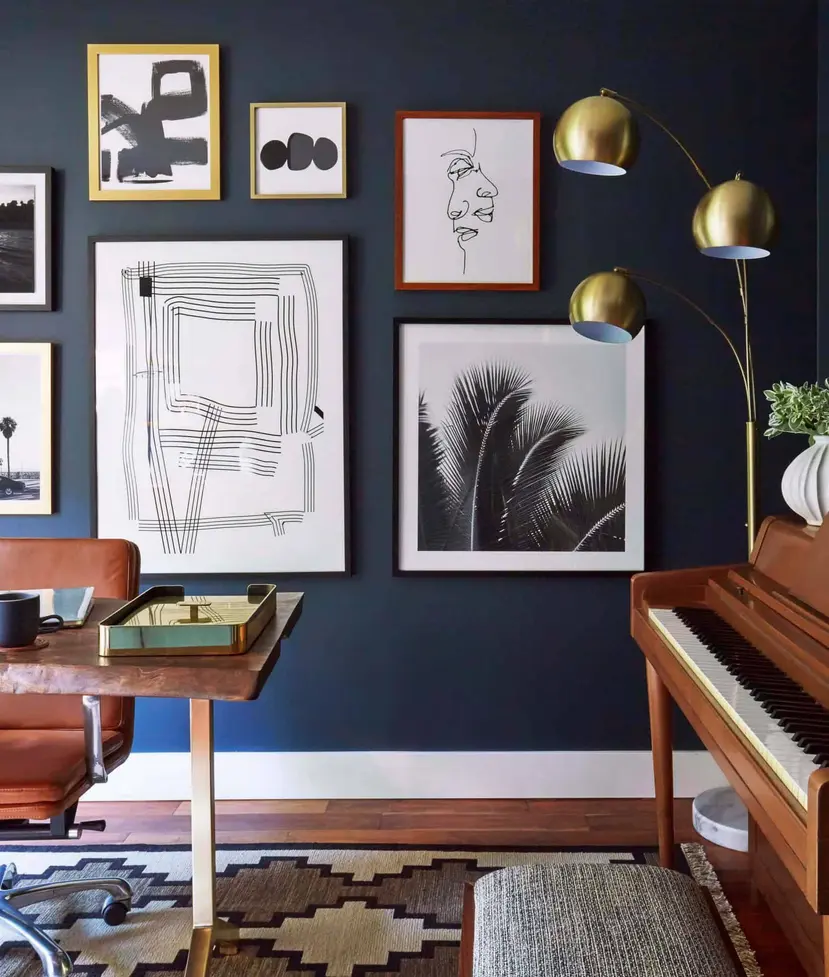
Dark walls do not need bright, direct light to work. In fact, the most forgiving approach is usually to light the room and its activities first, then add only soft, broad illumination to the walls. Keep intense fixtures away from the wall surface, avoid narrow beams aimed along it, and use shades, diffusers, and indirect light to limit hard reflections.
If a black or deep-colored wall suddenly shows every roller mark, patch, seam, and bit of texture at night, the usual cause is grazing light: light striking the wall at a very shallow angle. Change the angle and distribution of the light before assuming the paint color itself is the problem.
Why dark walls can reveal surface flaws
Dark paint does not automatically make a wall look rough. But it can make differences in sheen and reflected light easier to notice, especially where the surface has been patched or is slightly uneven.
The most revealing setup is a bright, directional source placed close to the wall. Examples include:
- A recessed downlight installed near the wall line
- An adjustable spotlight aimed sideways across the paint
- An uplighter positioned close to the baseboard
- An exposed-bulb floor lamp beside the wall
- A wall sconce that throws a narrow, intense band of light above or below itself
At a shallow angle, tiny rises and dips create small highlights and shadows. This is useful when a designer wants to emphasize stone, brick, timber grain, or a deliberately textured finish. On ordinary painted drywall or plaster, however, it becomes an inspection light.
A glossy or high-sheen paint makes the effect more obvious because it produces clearer reflections. Matte and flat finishes scatter light more softly and generally conceal minor surface imperfections better than glossier finishes. Satin is a middle ground: more washable than many matte paints, but more likely to reveal uneven preparation or touch-ups. Bob Vila notes that flat or matte finishes absorb light and can minimize visible surface imperfections.
The main rule: do not light along the wall
To avoid grazing light on walls, do not place a concentrated light source so close that its beam skims across the painted surface. Instead, choose one of these strategies:
- Aim light into the room. Let lamps illuminate seating, tables, and circulation areas rather than treating the wall as the main target.
- Bounce light off a ceiling or adjacent pale surface. Indirect light reaches the wall from many angles and creates fewer hard texture shadows.
- Use broad, diffused wall light when the wall needs illumination. A wide distribution is usually gentler than a narrow spotlight.
- Reduce contrast rather than adding more brightness. A dim surrounding room can make one bright wall patch look harsher than it is. Build a moderate, even level of ambient light instead.
The goal is not to make the wall uniformly bright. A dark wall can remain visually deep and intentional. The goal is to prevent small areas of intense light and sharp reflected streaks from becoming the room's focus.
Build the living room in layers
A dark living room usually feels best when several modest sources share the work. One powerful ceiling fixture often creates glare, deep shadows, and a flat, overlit center while leaving wall flaws unusually visible.
Start with soft ambient light
Ambient light makes the room comfortable to enter, move through, and converse in. For dark wall lighting, favor fixtures that spread light broadly or direct it upward rather than creating a hard-edged beam on the wall.
Useful approaches include:
- A pendant or ceiling fixture with an enclosed diffuser
- A shaded floor lamp that sends some light upward and some into the seating area
- Table lamps with opaque or fabric shades
- Cove, ledge, or other indirect architectural lighting, where suitable
- Recessed lights positioned to serve the room rather than closely tracing each wall
If you are planning recessed lights, avoid assuming that a perimeter row will automatically make dark walls look better. Fixtures too close to the wall can create scallops, streaks, or grazing effects. Use the room layout, ceiling height, fixture distribution, and the beam pattern together. See our guide to recessed lighting layout for the planning questions that matter before cutting ceiling openings.
Add task light where people need it
Task lighting stops you from compensating for a dark room by turning every light on at full output. Put light where it is useful: beside a reading chair, near a sofa, over a game table, or at a desk area.
A reading lamp should direct its useful light toward the book, lap, or tabletop鈥攏ot toward the nearest black wall. A floor lamp with an adjustable head can work well if its head is aimed down and inward. If the lamp has a bare or very clear bulb, it is more likely to create harsh reflected points on dark paint; a shade or diffuser is usually calmer.
Use accent light selectively
Accent lighting can make a dark room feel considered, but it should illuminate objects rather than scan the wall for defects. Light an artwork, bookcase, plant, fireplace surround, or a textured object with a controlled beam. Keep the beam contained and test the result from normal seating positions.
If you want the whole wall to appear lighter, use a true wall-washing approach rather than multiple tight spots. Wall washing is intended to spread light more evenly over the vertical surface, unlike grazing or sharp accent lighting. This overview of wall washing explains the distinction between broad, even wall illumination and more contrast-heavy accent techniques.
Choose shades and beam control carefully
The shape and material around a bulb matter as much as the bulb itself.
| Fixture detail | More forgiving for dark painted walls | More likely to expose flaws |
|---|---|---|
| Shade | Fabric, frosted glass, or an opaque shade that directs light into the room | Clear glass, exposed filament, or an unshielded bulb facing the wall |
| Beam | Broad, soft-edged distribution | Narrow spotlight or sharply defined beam |
| Direction | Down toward a task area, upward to the ceiling, or across the room | Sideways along the wall surface |
| Position | Set back from the wall or aimed away from it | Placed immediately beside or below the wall |
| Control | Dimmable and separately switched layers | One fixed, high-output source for the entire room |
Dimmers are especially useful because dark walls often look best at a lower, layered evening setting than under full output. They also make it easier to tune the balance between a bright lamp shade, a dark wall, and the rest of the room. Confirm that the bulb, fixture, and dimmer are compatible; for new wiring or changes to fixed lighting, use a qualified electrician and verify current local requirements.
Use warm-to-neutral light, then test it in the room
Color temperature will not repair a rough wall, but it changes the room's mood and the way a dark color reads. Many living rooms with charcoal, brown-black, deep green, or warm navy walls feel more relaxed under warm or warm-neutral light than under very cool white light.
The paint undertone matters. A black with blue undertones, for example, may look colder and more severe under a cool source, while a brown-black may become muddy under an overly warm source. Color rendering also matters when the room includes art, wood, textiles, or skin tones; learn more in our guide to what CRI means in lighting.
Test lamps after dark as well as in daytime. Natural light can reveal surface variation differently from artificial light, and a wall may look smooth in morning daylight but uneven under a particular lamp at night. View test patches from where people normally sit, not only from a few inches away.
Paint finish and preparation still matter
Lighting can reduce the visibility of flaws, but it cannot make a poor wall finish disappear under every condition. If the wall is visibly patchy in broad daylight or from normal viewing distance, preparation may need attention.
For most dark painted living room walls, matte or flat paint is the safest starting point when hiding minor imperfections is the priority. Satin and glossier finishes reflect more light and tend to show inconsistencies more readily. A comparison of interior paint finishes similarly notes that matte finishes are non-reflective, while satin offers more sheen and gloss requires careful surface preparation.
That does not mean every surface should be flat. A restrained contrast can be attractive: matte walls with slightly shinier trim can add depth without putting reflective sheen across the whole wall. The key is to reserve reflective finishes for smoother, more deliberate surfaces.
A practical lighting plan for a black-walled living room
For a typical seating room, begin with this simple arrangement:
- Use one soft central or ceiling-based ambient source, preferably diffused or bounced rather than sharply downlit.
- Place a shaded table lamp or floor lamp at each active seating zone.
- Aim reading lights toward pages and laps, not across the wall.
- Add one controlled accent light for artwork, shelving, or a focal object, if needed.
- Keep uplights and spotlights away from the base of imperfect painted walls.
- Put ambient, task, and accent lighting on separate controls so the room can be tuned for reading, conversation, television, or entertaining.
For tall walls, consider whether sconces would create a useful pool of light or simply form bright vertical streaks. Their height, shielding, and beam direction are more important than their decorative style. Our guide to wall sconces for tall living room walls can help with that decision.
Common mistakes to avoid
Putting recessed lights too close to the wall
A close perimeter row can turn ordinary drywall texture into a prominent pattern. Before relocating existing fixtures, try reducing their output or using other layers more heavily to see whether the effect improves.
Using a bright bare bulb beside dark paint
A visible bulb may look decorative, but it can create glare and reflected hotspots. Add a shade, change its direction, or move the lamp farther into the room.
Trying to brighten the wall with narrow spotlights
More light is not always more flattering. Multiple bright spots often make dark paint look blotchy and increase perceived contrast between smooth and patched areas.
Choosing glossy paint to make the room brighter
Gloss can create drama on a very smooth, well-prepared wall, but it also reflects light more distinctly. If hiding flaws is the priority, choose a lower sheen and bring brightness into the room through lamps, pale furnishings, artwork, and reflective objects instead.
Evaluating the wall only at full brightness
A dark room should have a usable range of settings. Assess it at the lighting level you actually use in the evening, with the lamps and shades in their normal positions.
The useful balance
The best way to light dark walls is to make the room feel illuminated without making the wall surface the brightest or most intensely inspected plane. Use broad ambient light, localized task lamps, and selective accents. Avoid narrow beams close to the wall, control reflective glare with shades and lower-sheen paint, and give each lighting layer its own dimming or switching control.
A dark wall will still have character and variation鈥攖hat is part of its appeal. But with light aimed into the room rather than along the paint, it can read as moody, calm, and intentional instead of unfinished.
References
- Difference Between Matte and Glossy Paint Finish for Interior Walls. (n.d.). https://knapppainting.com/difference-between-matte-and-glossy-paint-finish-for-interior-walls
- Bold Black Walls: Perfect Timing For A Dramatic Room Makeover | ShunShelter. (n.d.). https://shunshelter.com/article/when-to-paint-a-room-black
- How to Style Dark Interiors Without Making Your Home Feel Smaller 鈥?Vaunt Design. (n.d.). https://vauntdesign.com/blogs/our-blog/10-tips-for-painting-walls-with-dark-colours
- Black Wall Paint On Living Room Walls - Jennifer Rizzo. (n.d.). https://jenniferrizzo.com/living-room-with-black-wall-paint
- Wall Washing Lighting Guide: Spacing, Fixtures & Design Tips - Stetra Lighting. (n.d.). https://stetralighting.com/wall-washing-lighting-guide
- Dark and Moody Interior Design: An Interior Designer鈥檚 Guide to Creating a Dramatic, Cozy Home | Living Large In A Small House, LLC. (n.d.). https://livinglargeinasmallhouse.com/dark-and-moody
- 10 Things to Know Before Painting Your Walls a Dark Color - Bob Vila. (n.d.). https://www.bobvila.com/articles/painting-walls-dark-color
- How to Paint Over Dark Walls: Expert Tips for a Smooth Transition | Aapka Painter. (n.d.). https://aapkapainter.com/blog/tips-to-paint-over-dark-walls


